
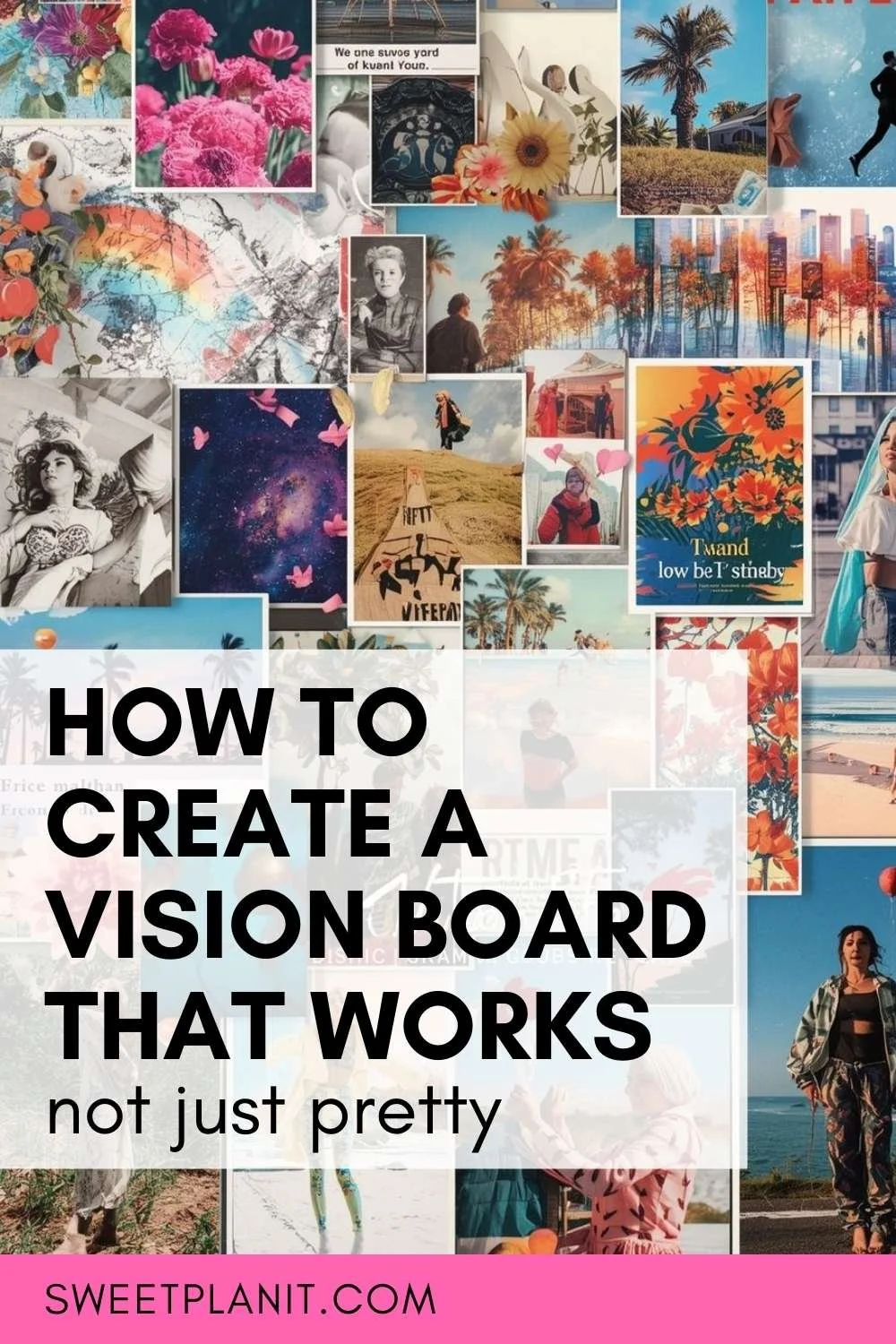
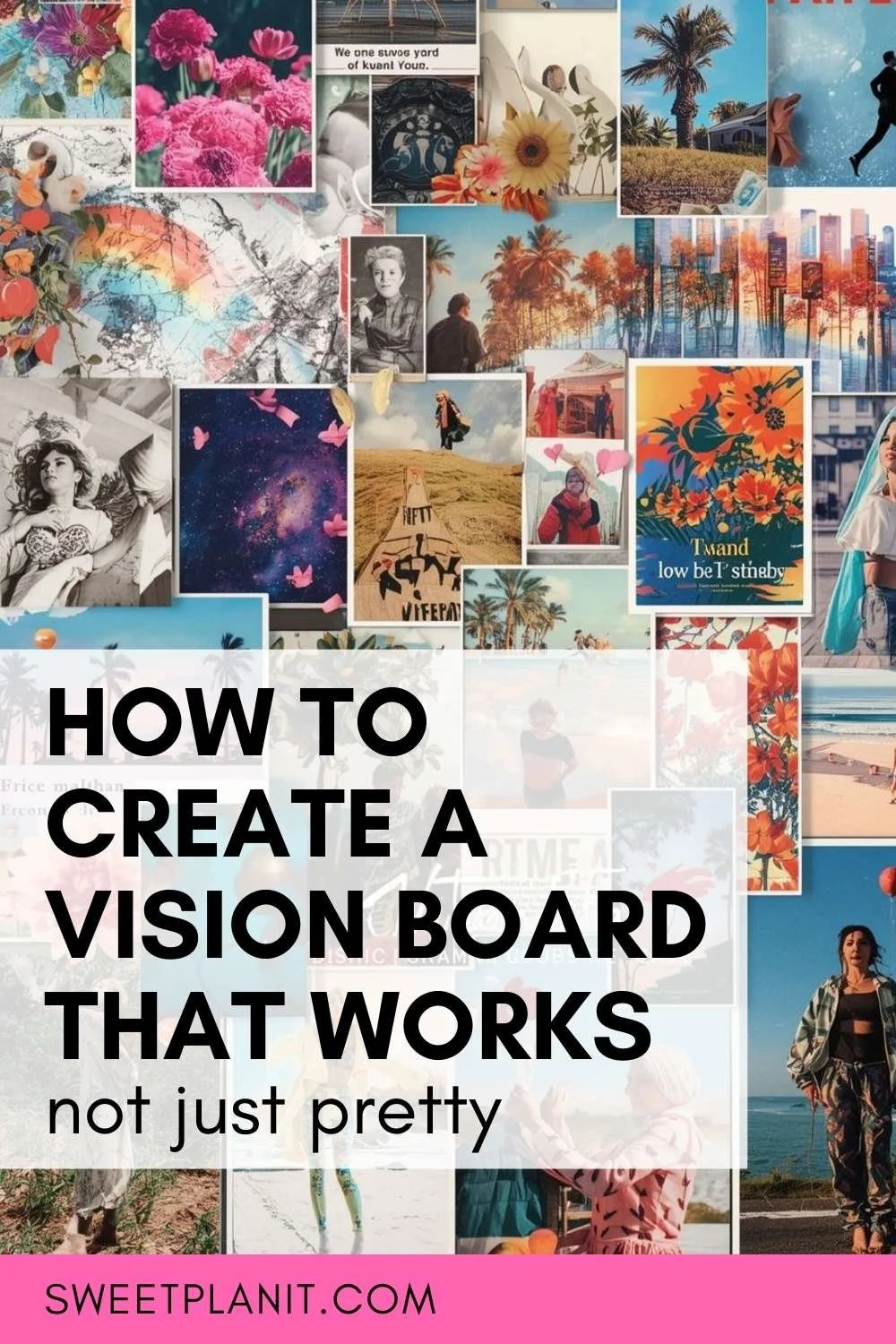
How to Make a Vision Board That Actually Works
Let’s be honest for a second.
Most vision boards are beautiful…and then completely ignored.
They get made in a burst of motivation, hung up somewhere nice, and slowly turn into background décor. Not because you did it wrong, but because no one ever explains what a vision board is actually supposed to do.
A vision board isn’t meant to magically change your life.
It’s meant to clarify direction so your decisions get easier.
When it works, it works because it helps you focus. When it doesn’t, it’s usually because it’s too vague, too busy, or completely disconnected from real life.
So let’s do this the SweetPlanIt way.
Simple. Realistic. Actionable.

First, what a vision board is (and what it’s not)
A vision board is:
a visual reminder of what you’re moving toward
a way to clarify priorities
a tool that supports better decisions
A vision board is not:
a collage of everything you want “someday”
a personality test
a manifestation shortcut
something you make once and never look at again
The goal isn’t inspiration for five minutes.
The goal is alignment for the whole year.
Step 1: Start with clarity, not images
Before you touch Pinterest, magazines, or Canva, you need clarity.
Ask yourself three questions and answer them honestly:
What do I want more of this year?
(Time, calm, consistency, connection, creativity, health, ease.)
What do I want less of?
(Overwhelm, clutter, rushing, reacting, overcommitting.)
What does “a good year” actually look like for me?
Not impressive. Not aspirational. Real.
Write your answers down. This step matters more than the board itself.
If you skip this, your vision board will be pretty but powerless.
Step 2: Choose 3 focus areas (not your whole life)
This is where most vision boards go off the rails.
They try to cover everything:
career, health, relationships, home, travel, finances, hobbies, self-care, and a partridge in a pear tree.
Instead, choose three focus areas for the year.
Examples:
Health, Home, Work
Energy, Family, Finances
Creativity, Consistency, Calm
These become the anchors for your board.
If you’ve already done a yearly reset or focus areas exercise, use those here. Your vision board should reflect the direction you’ve already chosen, not introduce new chaos.
Step 3: Pick images that represent feelings, not fantasies
Now you can gather images.
But here’s the filter to use as you choose:
Instead of asking, “Do I want this?”
Ask, “What does this represent?”
A photo of a tidy kitchen might represent:
ease
order
less friction
A photo of a woman walking outside might represent:
movement
consistency
mental clarity
Avoid images that feel exciting but disconnected from your real life. If it feels like a fantasy you have no intention of acting on, leave it out.
Your vision board should feel grounding, not overwhelming.
Step 4: Keep it small and readable
You don’t need a massive board.
In fact, smaller usually works better.
Options that work well:
one page
a single Canva layout
a planner insert
a phone wallpaper
Aim for 5–9 images total. Enough to guide you, not so many that your brain tunes it out.
White space is your friend here.
Step 5: Add one word or short phrase per focus area
This is what turns a vision board into a working tool.
For each of your three focus areas, add:
one word, or
a short phrase
Examples:
“Steady”
“Less, but better”
“Protect my energy”
“Simple routines”
These act like signposts. When you’re deciding what to say yes to, what to schedule, or what to buy into, you can check against them.
If it doesn’t support the vision, it’s easier to let it go.
Step 6: Translate vision into one small goal
This is the step most people skip, and it’s why their vision board stops working.
For each focus area, answer:
“What is one realistic goal that supports this?”
Examples:
Vision: Calm mornings
Goal: Do a short night-before reset most nights
Vision: Better health
Goal: Walk three times a week
Vision: More focus at work
Goal: Choose a daily Top 3 instead of long lists
Your vision board doesn’t replace goals. It guides them.
Related Post: How to Plan Your 2026 Goals in 30 Minutes
Step 7: Decide where you’ll actually see it
A vision board that’s hidden doesn’t help.
Choose one place you’ll see regularly:
your planner
your desk
your fridge
your phone wallpaper
You don’t need to stare at it daily. You just need it to show up often enough to influence decisions.
Step 8: Do a monthly check-in (this keeps it alive)
Once a month, take five minutes and ask:
Does this still feel right?
Is anything shifting?
What’s one small adjustment I want to make?
You’re allowed to update your vision board. Growth isn’t static.
Related Post: The Sunday Reset Routine that Makes Mondays Easier
The bottom line
A vision board works when it’s connected to real life.
It’s not about dreaming bigger.
It’s about choosing direction and making follow-through easier.
When your vision is clear, your planning gets simpler, your goals feel more aligned, and you spend less time second-guessing yourself.
That’s the point.
Happy planning!



If your year isn’t going how you planned, you’re not behind; you’re adjusting. This post walks you through a simple reset when life throws curveballs, so you can regroup, shift your goals, and keep moving forward without guilt, overwhelm, or buying a whole new planner.