
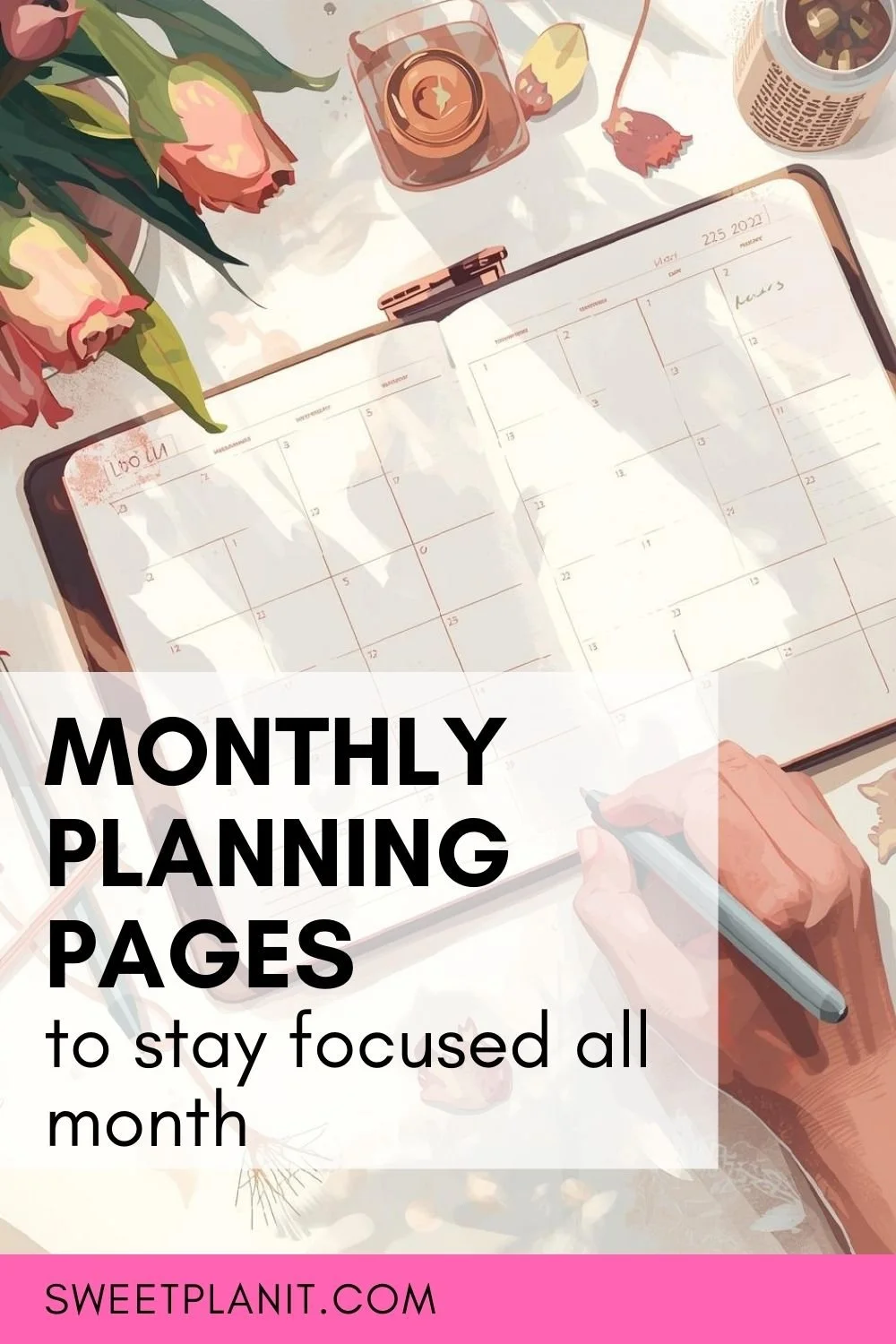
Monthly Planning Pages That Keep You Focused All Month
Monthly planning sounds simple.
Then the month actually starts…and suddenly you’re busy, distracted, and wondering where your focus went.
This isn’t a motivation problem.
It’s a planning problem.
Most monthly pages are either too vague to be useful or so packed with sections that you stop using them by week two. What actually works is a small set of monthly pages that do one job well: keep you oriented, focused, and realistic all month long.
Let’s talk about the monthly planning pages that actually earn their spot in your planner.

Why monthly pages matter more than you think
Weekly plans help you survive the week.
Daily lists help you get through the day.
Monthly pages are what make sure your weeks add up to something meaningful.
Without them:
• You stay busy but unfocused
• You forget what you said mattered
• You overcommit early and feel behind by mid-month
Good monthly planning isn’t about controlling your time. It’s about setting guardrails so the month doesn’t run you.
The 5 monthly planning pages that work in real life
You do not need all of these every month.
You need the ones that support how your life actually functions.
1. The Monthly Focus Page
This is the anchor for the entire month.
What goes on it:
• One main focus (not five)
• Up to three priorities that support it
Examples:
• Focus: Health
• Priorities: walk 3x a week, schedule appointments, meal plan Sundays
This page answers one question all month long:
“What am I saying yes to on purpose right now?”
If a task doesn’t support this page, it’s optional.
Related Post: Pick Your 3 Focus Areas for the Year
2. The Monthly Calendar (functional, not decorative)
Your monthly calendar is not for squeezing in everything.
It’s for seeing the overview of your month.
Use it for:
Appointments and deadlines
Travel or busy weeks
Personal commitments that affect energy
What not to use it for:
Detailed to-do lists
Micromanaging every hour
This page helps you plan realistically, especially when the month already has pressure built in.
3. The Monthly Priorities List
This is where clarity lives.
Keep it short:
Three to five priorities max
Not projects. Not goals.
Priorities are the things that, if done, make the month feel successful.
Examples:
Finish taxes
Prep for January content
Declutter the hall closet
This page is your reminder that everything is not equally important, even if it all feels loud.
Related Post: Choose Your Monthly Goals in 15 Minutes
4. The Habit Focus Page (one habit, not a system)
Monthly habit tracking works best when it’s simple and focused.
Choose:
One habit you want to support this month
Examples:
Weekly reset on Sundays
Evening shutdown routine
Daily walk
Track with:
Checkmarks
Dots
A simple yes/no
The goal is awareness, not perfection. This page supports consistency, not guilt.
5. The Notes / Parking Lot Page
This page saves your sanity.
Use it for:
Ideas you don’t want to forget
Tasks that don’t belong this month
Random reminders
Instead of interrupting your focus, everything has a place to land.
Think of this page as the buffer between your brain and your plan.
How these pages work together
Here’s the key most people miss:
You don’t “work” out of all these pages every day.
You:
Review them weekly
Glance at them when making decisions
Use them to reset when you feel scattered
They are reference points, not obligations.
Related Post: A Simple Reset that Keeps You On Track
If you want to keep it very simple
Start with just three:
Monthly Focus Page
Monthly Calendar
Monthly Priorities List
That alone will dramatically change how intentional the month feels.
You can always layer more later. Planning should grow with you, not overwhelm you.
One final reminder
Monthly planning is not about predicting the month perfectly.
It’s about deciding what matters before everything else tries to decide for you.
Focused months aren’t quieter.
They’re clearer.
And clarity makes everything easier to follow through on.


Want a month that feels clear instead of chaotic? These simple monthly planning pages help you stay focused without overplanning, including a monthly focus page, priorities list, habit page, and a notes “parking lot” so your weeks actually add up to what matters.