
The “Less Planning, More Doing” Weekly Setup
If you’ve ever spent more time planning your week than actually living it, welcome. You are in the right place.
Planning is supposed to make life easier. But somewhere along the way, it turned into a whole production. Ten tabs open, six lists, a color system you can’t maintain, and a planner that starts feeling like homework.
That’s not the goal.
The goal is a weekly setup that takes 10 to 15 minutes, clears your head, shows you what matters, and gets you moving. You plan just enough to stay on track, then you go live your life.
This is minimal planning for real women with full plates.

What “minimal planning” really means
Minimal planning is not “I wing it and hope for the best.”
It means:
You plan only what you need to make decisions easier.
You keep your week visible at a glance.
You focus on what matters, not what looks impressive.
You’re building a simple steering wheel, not a control tower.
The Less Planning, More Doing Weekly Setup
You’ll do this once a week.
Ideally, on Sunday evening or Monday morning, but honestly, whatever day you can manage is the right day.
Step 1. Brain dump fast, two minutes
Get the noise out of your head before you organize anything.
Set a timer for two minutes and write down:
Everything you have to do.
Everything you’re worried about forgetting.
Anything you keep mentally circling.
No sorting yet. Just get it out.
Half your stress is just your brain trying to hold too much at once.
Step 2. Look at your calendar reality, two minutes
Open your calendar and scan the week.
Ask:
What’s already locked in.
Which days are fully-packed and heavy.
Which days have a bit of breathing room.
You’re not judging your schedule. You’re just seeing the real landscape.
Minimal planning only works when it respects reality.
If you’re ready to connect your weekly planning to a clear 2026 direction, grab the Yearly Reset Kit here.
Step 3. Pick your Weekly Top 3, three minutes
This is where your week gets clarity.
Choose three priorities for the week. Not your entire to-do list. Three things that matter most.
Ask:
“What three things, if I finish them, will make me feel like this week counted?”
Pick from your monthly priorities if you have them.
Examples:
Finish my blog post draft.
Walk twice.
Do my weekly reset and tidy one hotspot.
Write them somewhere you’ll see every day.
If you don’t pick your priorities, your week will pick them for you, and it will pick chaos.
Step 4. Schedule what matters first, three minutes
Now take your Top 3 and place them lightly on the calendar.
Even if it’s just a rough block.
Examples:
Walks on Tuesday and Thursday.
Writing block Wednesday morning.
Reset time Sunday evening.
You’re not mapping every hour. You’re giving your priorities a “when” so they don’t float.
Habits that aren’t scheduled are just vibes.
Step 5. Create your “Must-Do” list for the week in three minutes
Go back to your brain dump and pull out the true must-dos.
These are the things that actually need to happen this week.
Think:
Appointments
Deadlines
Time-sensitive errands
Anything that will cause problems if ignored
Keep it short. If your must-do list is 27 items long, that is not a must-do list; that is a panic list.
Write it under your Top 3 or on a separate page.
Step 6. Choose your “Nice-to-Do” list, two minutes
Everything else from your brain dump that you’d love to do, but doesn’t need to happen this week, goes here.
This list is optional. It’s your “if I have time” menu.
Why this matters:
When your “nice-to-dos” are mixed into your must-dos, you feel behind all week.
Separating them is a kindness to your nervous system.
Step 7. Add a daily 5-minute reset
Minimal planning stays minimal because you reset daily instead of letting things pile up.
At the end of each day, take five minutes to:
Close any loose tasks.
Move what didn’t happen.
Pick your one main priority for tomorrow.
That’s it.
Five minutes a day saves you thirty minutes of chaos later.
What your weekly page should look like
You don’t need a fancy spread. You need a simple view.
Your weekly setup page can be:
Weekly Top 3 at the top
Must-do list underneath
Nice-to-do list on the side or bottom
A small note for habit anchors
One page. One glance. Done.
If you need extra structure, add a tiny box for each day with one line: “Main thing today.” That’s enough.
Why this setup works when you’re busy
Because it focuses on decisions, not decoration.
It helps you decide:
What matters this week.
When you’ll do it.
What is truly required.
What can wait.
That’s the whole game.
Planning should reduce decisions during the week, not create more of them.
If you want the ultra-minimal version
Do only these three steps:
Brain dump
Weekly Top 3
Schedule one priority
Even that will change your week.
Progress loves a simple plan.
A realistic reminder
Minimal planning is not about doing less.
It’s about planning less so you can do more of what matters.
You’re not trying to manage every detail of your life on paper.
You’re trying to stay clear, steady, and focused enough to live it well.
So keep it simple.
Keep it visible.
Keep it realistic.
That’s your weekly setup. Less planning, more doing, all year long.
If you’re ready to connect your weekly planning to a clear 2026 direction, grab the Yearly Reset Kit here.



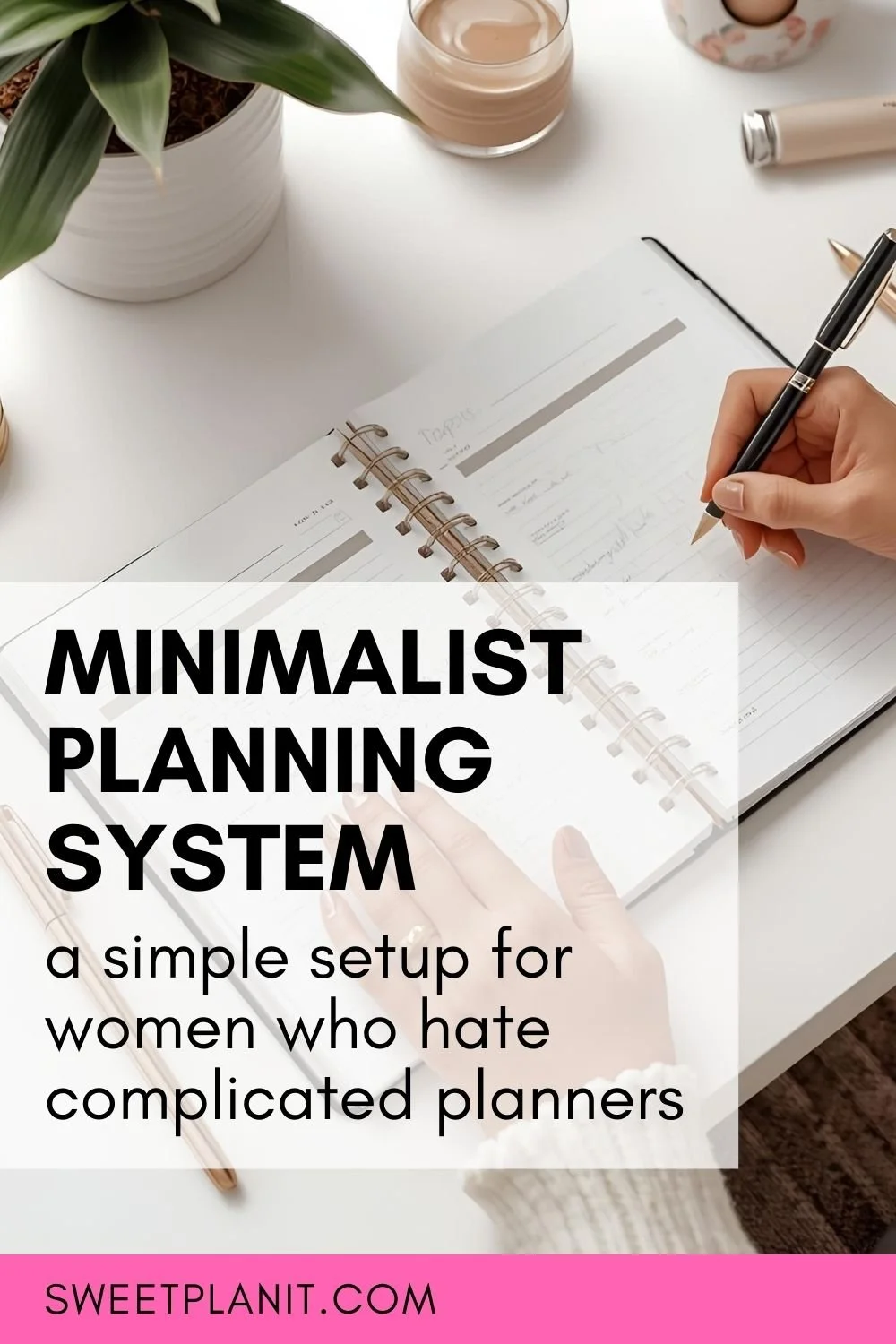


Sick of copying the same tasks week after week? This weekly planner setup breaks your list into a few small sections so you always know what to do today, what’s next, and what can wait, without rewriting everything. Simple, functional planning that actually works in real life.