
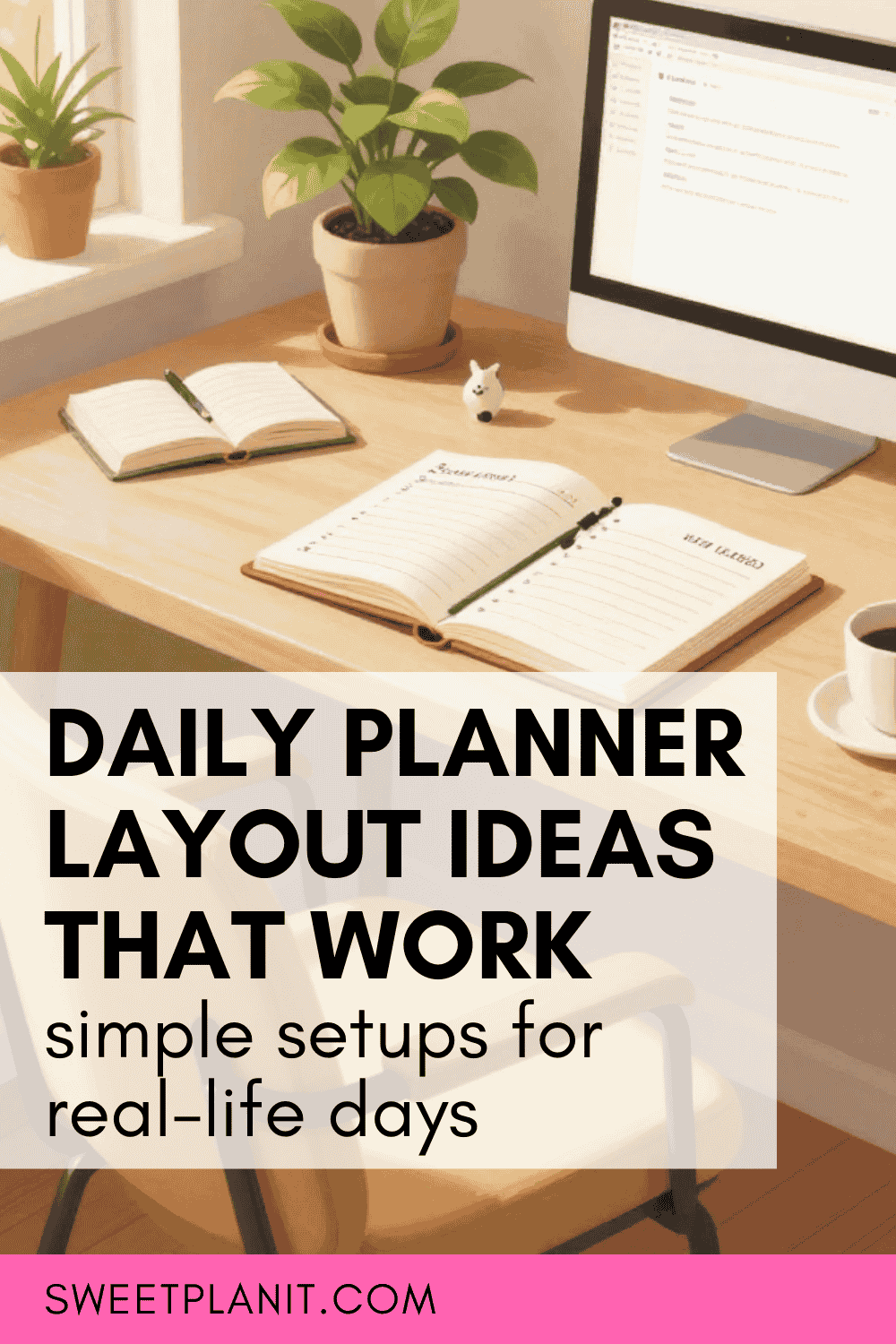
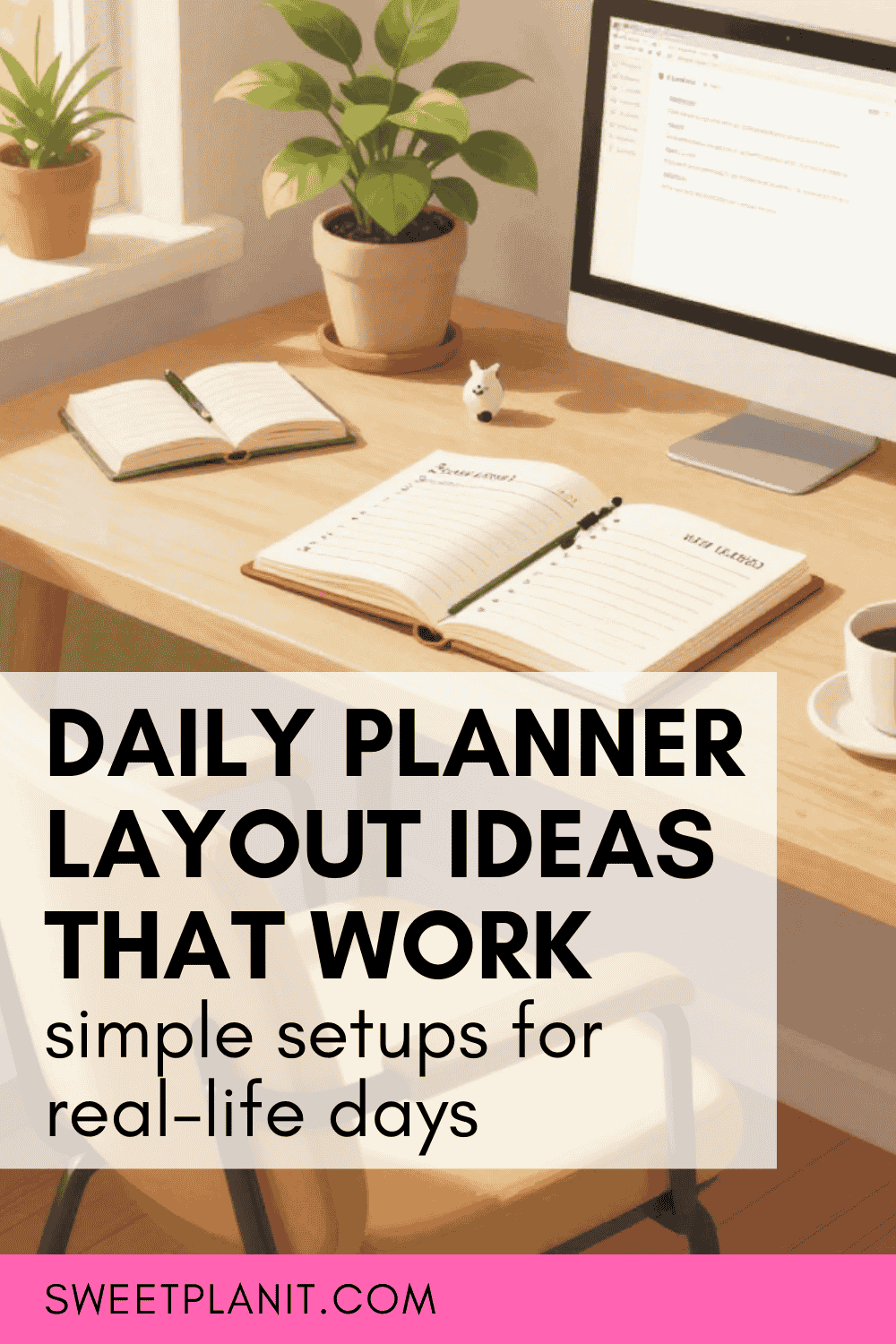
Daily Planner Layout Ideas That Actually Work in Real Life
If you’ve ever searched for daily planner layout ideas and felt inspired for about five minutes… then immediately overwhelmed, you’re not alone.
Most planner layouts look amazing online. Clean. Color-coordinated. Perfect handwriting. Plenty of time to decorate.
Real life doesn’t look like that.
Real life is:
appointments popping up mid-day
tasks that take longer than expected
energy that changes by the hour
plans that shift without warning
So instead of showing you layouts that look good in photos, I want to walk you through layouts that hold up when life is messy. Layouts that don’t require rewriting pages, starting over, or feeling like you failed because the day didn’t go as planned.
Think of this as sitting next to me while I flip through planners and say, “Okay, this one actually works. This one doesn’t.”

What makes a daily layout work in real life
Before we get into specific layouts, here’s the filter I’m using for every single one:
A daily layout works if it:
gives your brain somewhere clear to land
doesn’t punish you when plans change
can handle unfinished tasks without guilt
stays usable even when the day goes sideways
If a layout requires perfect follow-through to feel “successful,” it’s not realistic. It’s fragile.
With that in mind, here are daily layouts that actually support you.
Layout 1: Time on the left, list on the right
This is one of the most forgiving daily layouts out there.
On the left side of the page:
• appointments
• meetings
• time-specific commitments
On the right side:
tasks
reminders
errands
anything flexible
Why this works:
Life rarely follows a perfect schedule.
Separating fixed commitments from flexible tasks lets the day breathe. If something runs long, you’re not crossing out half your page.
This layout also makes it obvious why the day feels full. You can see where your time is already spoken for instead of wondering why nothing got done.
This works especially well if:
You have appointments most days
Your schedule shifts often
You hate rewriting tasks
Layout 2: Top 3 + everything else
This one is simple, but powerful when used honestly.
At the top of the page:
Your Top 3 priorities for the day
Below that:
A running list of everything else
The key is that the Top 3 is visually separated. Bigger text. Boxed off. Different color. Whatever makes it stand out.
Why this works:
When the day gets noisy, your eyes go straight to what matters most. Even if nothing else gets touched, you know where to put your energy.
This layout prevents the “I did a lot but still feel behind” feeling, because success isn’t defined by finishing the entire list.
This works especially well if:
Long lists overwhelm you
You tend to overcommit
You want clarity without rigidity
Related Post: What to Do When Your To-Do List Is Too Long
Layout 3: One column, no boxes
This one surprises people, but it’s incredibly effective.
The entire page is one vertical column:
tasks
notes
reminders
thoughts as they come up
No sections. No boxes. Just one running list.
Why this works:
Boxes create pressure. They imply expectations. A single column removes the sense that things must happen in a specific order or fit into a specific space.
This layout adapts beautifully to unpredictable days. You can add, cross out, move on, and keep going without the page feeling “ruined.”
This works especially well if:
Your days are unpredictable
You think as you go
You hate being boxed in (literally)
Related Post: What to Do When You’re Feeling Overwhelmed
Layout 4: Half planning, half thinking space
Split the page horizontally.
Top half:
tasks
appointments
priorities
Bottom half:
notes
thoughts
ideas
reminders that pop up
Why this works:
A lot of daily overwhelm comes from not having a place for thoughts to land. This layout gives your brain permission to think without hijacking the task list.
It also prevents random notes from crowding out actual plans.
This works especially well if:
Your brain is always processing
Ideas interrupt your focus
You like structure with flexibility
Layout 5: The “minimum viable day”
This is for low-energy days, busy seasons, or weeks that feel heavy.
Your page includes only:
today’s date
1–3 priorities
one small note space
That’s it.
Why this works:
Some days are not meant for elaborate planning. This layout gives you just enough structure to stay grounded without asking for more than you can give.
It keeps you connected to your planner even when motivation is low, which matters more than having a “perfect” day.
This works especially well if:
You’re burned out
You’re in a busy season of life
Planning feels like pressure
Related Post: The Sunday Reset Routine That Makes Mondays Easier
A quick reality check before you choose a layout
Before committing to any daily layout, ask yourself:
Does this layout still work if I don’t finish everything?
Does it allow plans to change without frustration?
Does it help me decide what matters today?
Will I still use this on a messy day?
If the answer is no, the layout isn’t wrong; it’s just not right for real life.
You don’t need the “best” layout
You need the one that:
matches how your days actually unfold
supports your energy, not your ambition
lets you keep moving without starting over
Layouts are tools, not rules. You’re allowed to adjust them, simplify them, or abandon them mid-week without guilt.
That’s not inconsistency.
That’s responsiveness.
And that’s what makes planning sustainable.
Happy planning!




Not sure if you should use a paper planner or go digital? This simple guide breaks down the real-life pros and cons, what each style is best for, and how to tell what will actually stick for you. Includes a hybrid option if you need flexibility for scheduling but still want paper for to-do lists, notes, and brain dumps.