
How to Build a Website That Feels Like a Brand, Not a Diary
If you’re staring at your website wondering why it feels…scattered, this is probably why:
You built a website.
You didn’t build a brand.
And those are not the same thing.
When blogs first started, they were diaries. Updates. Store news. Life happenings. That made sense at the time. Social media didn’t exist yet. Your website was the update feed.
But that’s not what a monetizable website is in 2026.
If you want a website that earns, builds authority, and actually grows, it has to feel focused. Clear. Intentional. Like it knows who it’s for.
Let’s talk about what needs to shift to make it a website that works today.

What “Too Broad” Actually Looks Like
Here’s a real example of a website that is too broad.
A lifestyle blog that wants to teach Pinterest strategy.
Those two things don’t naturally connect. When I land there, I don’t know who it’s for.
Is it for women who want decor ideas? Or business owners who want traffic?
That disconnect creates friction.
Now compare that to something broad but structured:
Faith. Fitness. Food. Parenting. Business.
I still think that’s wide, but at least the navigation is clear. I can see defined buckets.
The problem isn’t multiple interests.
The problem is unclear positioning.
If someone lands on your homepage and can’t quickly tell:
Who this is for
What she’ll get
Why she should stay
It feels like a diary.
Not a brand.
The Shift I’m Making Right Now
This isn’t theory for me. I’m in the middle of this pivot on THIS website.
When I first leaned heavily into planning content for this site, I quickly realized something.
I love planning.
But planning is not the whole story.
Planning is how I run my businesses.
It’s how I manage YouTube channels, websites, digital products, and multiple systems at once.
When I focused only on planning, I was narrowing myself into a niche that was too small for the full value I bring.
So here’s what I physically did:
I identified new pillars first. That clarified my navigation.
I changed the homepage tagline to reflect the bigger vision.
I’m restructuring the homepage to match those pillars.
I’m shifting tone to reflect the broader mission.
What I did not do:
Archive old content. It still brings traffic.
I just removed it from navigation.
That’s how you evolve without burning everything down.
Your website can grow with you.
But it has to grow intentionally.
The 3 Big Shifts That Turn a Diary Into a Brand
1. Know Who You’re Writing For
Not in a fluffy “my ideal client likes coffee” way.
I mean this:
When I land on your homepage, your articles, and your navigation, I should immediately understand who this is built for.
It doesn’t have to be a screaming headline.
But it should be obvious.
If your content could apply to literally anyone, it will connect with no one.
The more you niche down, the more relatable you become.
Trying to talk to everyone is the fastest way to build something forgettable.
2. Define Your Content Buckets
This is non-negotiable.
Your categories are not decoration.
They are your structure.
Defined content buckets do two things:
They make navigation easy for the reader.
They give you depth.
When you have 3–5 focused buckets, you can really go in on topics. You can build authority. You can internally link. You can create clusters of content that support each other.
That’s how brands feel solid.
Random posts about whatever you felt like writing that week feel like journaling.
And journaling belongs on Substack, not a monetizable website.
3. Stop Writing About Yourself
This one matters.
Your website is not the place for “Here’s what I did this weekend.”
It’s not Instagram.
It’s not a personal update board.
That doesn’t mean you remove yourself from it.
It means your stories serve the reader.
When I share a story about launching my retail website before it was perfect, I’m not updating you on my history.
I’m showing you what “done is better than perfect” looks like in action.
Stories are powerful when they move the reader forward.
They are clutter when they don’t.
Let’s Talk About Monetization
If you want this to make money someday, structure matters.
Right now, traffic is different from what it was even a few years ago. Google has shifted. AI has shifted search behavior.
Pinterest is now my primary traffic driver.
So when I start or restructure a site, my goals are clear:
Build enough traffic to monetize with ad networks (like MediaVine).
Create my own products to sell directly.
Add affiliate links that naturally fit the content.
None of that works if your site is random.
Monetization requires:
Clear niche
Searchable or pinnable content
Internal linking
Authority positioning
Depth in topics
Strategic offers
If someone reads three of your articles and still doesn’t understand what you specialize in, monetization becomes very difficult.
The Thing I Need You to Stop DoinG
These are easy traps to fall into, but they won’t help you at all right now.
Stop tweaking fonts.
Stop buying themes.
Stop redesigning your logo.
Stop delaying publishing because the branding isn’t perfect.
No one is looking at your site right now.
That’s not harsh. It’s freeing.
The thing that will move the needle is content.
Helpful, focused, specific content.
When I opened my brick-and-mortar store, I insisted the website launch at the same time.
My business partner kept saying we’d launch when it was perfect.
I launched it anyway.
Because done is better than perfect.
Once it was live, we improved it constantly.
You cannot refine what doesn’t exist.
You cannot optimize what hasn’t been tested.
The same is true for your website.
What a Brand Actually Feels Like
When I land on a strong site, I feel this:
Clarity.
Confidence.
Consistency.
Structure.
I know who it’s for.
I know what she stands for.
I know what I’ll learn if I stay.
It doesn’t have to be perfect.
It just has to be intentional.
Your website will evolve. Mine have for 30 years.
But evolution is different from randomness.
If your site currently feels like a collection of thoughts, that’s okay.
Now you know the shift.
Choose your pillars.
Clarify your audience.
Build depth.
Stop journaling.
Start structuring.
You can do this.

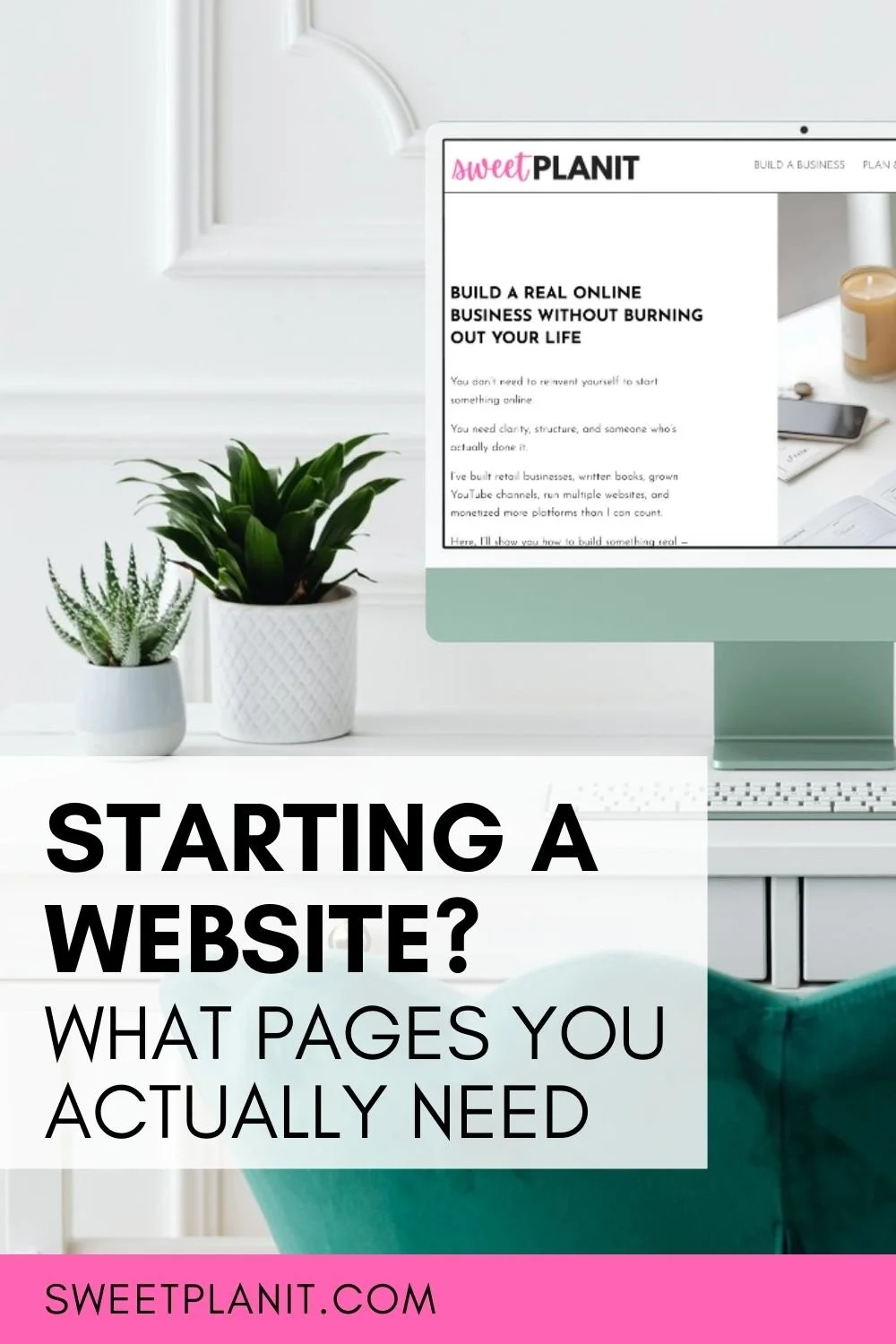



Thinking about starting a website in 2026 but wondering if AI and social media have made blogs irrelevant? This post breaks down what’s actually changed, why platforms like Instagram and Facebook are rented space, and when building your own website still makes strategic sense. If you’re a woman over 40 building an online business and want something you control, not just followers you borrow, this will help you decide your next move with clarity.