
The Simplest YouTube Channel Setup That Still Looks Professional
You want to start a YouTube channel.
But every time you look up what you need, you end up more confused than before.
Cameras.
Mics.
Lighting.
Editing software.
Studio setups.
It feels like you need a production team just to hit record.
You don’t.
Today I’m going to give you the real list, the simple setup that lets you start right now without blowing your budget or your confidence.
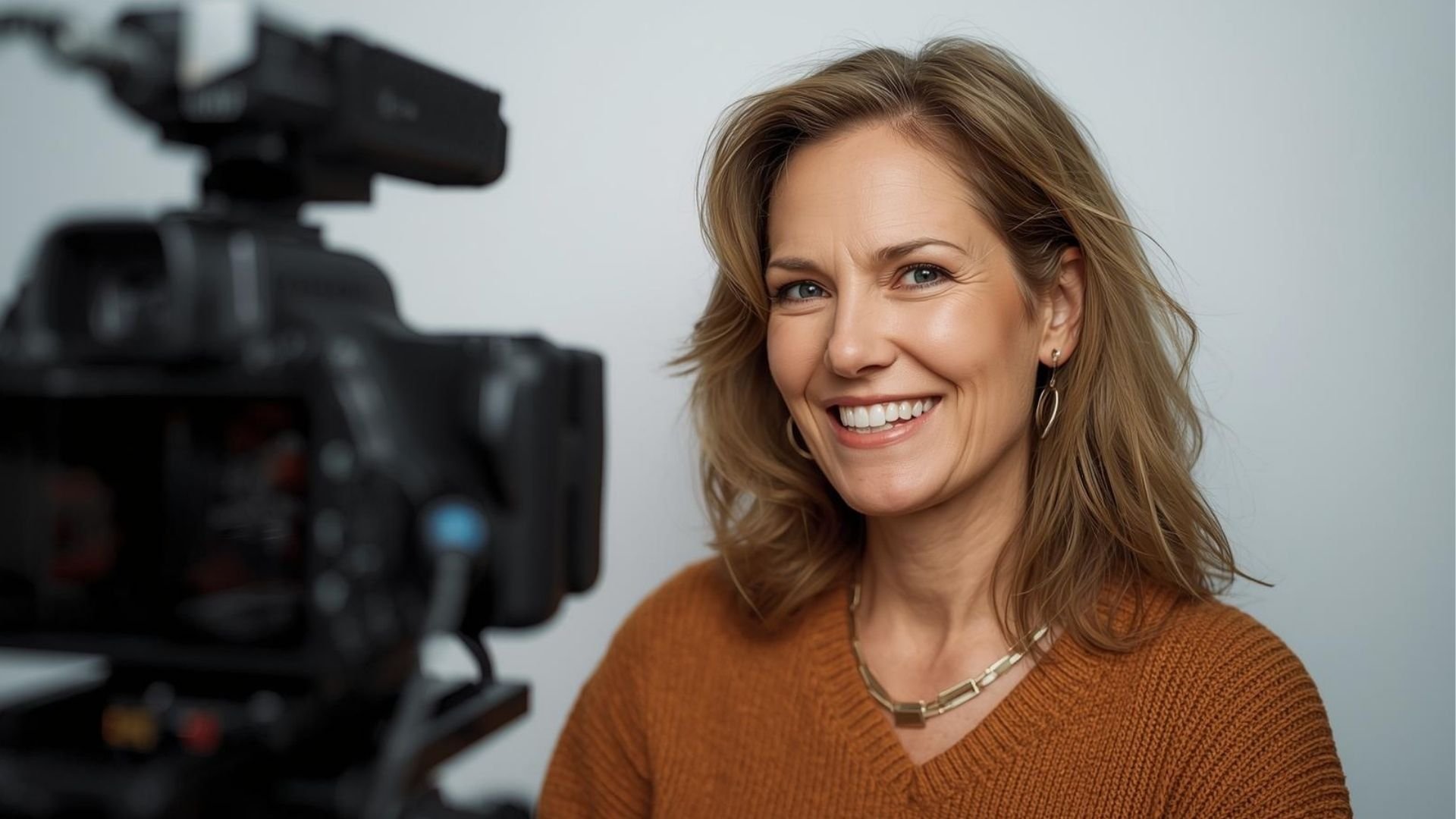
You do not need a studio.
You do not need a $2,000 camera.
You do not need a tech degree.
You need a setup that removes friction.
Because the biggest threat to your channel isn’t bad lighting.
It’s hesitation.
I learned this the hard way.
Years ago, my husband bought me a very expensive DSLR camera with all the “right” accessories. Extra lenses. Complicated audio setup. Settings I didn’t understand. It was beautiful.
And I avoided it.
Every time I thought about filming, I also thought about setting that thing up.
Weeks went by.
Then one day, I grabbed my iPhone and hit record.
Problem solved.
That was the moment I understood something important:
Professional isn’t about equipment.
It’s about clarity and consistency.
Let’s build this the simple way.
What “Professional” Actually Means
When you think “I want my channel to look professional,” you probably mean:
Calm
Competent
Clear
Trustworthy
Polished but still approachable
None of those require fancy gear.
They require three things:
Clean audio
Controlled light
Intentional framing
Everything else can improve over time.
And it should improve over time.
You don’t need to fix it all at once. Improve one thing per video.
That’s how you grow without overwhelming yourself.
If You’re Starting From Zero
Let’s assume you already have a phone.
That means your budget can stay under $150.
Here’s what I use right now:
That’s it.
I own expensive gear. I choose not to use it.
Because simple gets filmed.
Complicated gets postponed.
The First Thing to Fix: Audio
I have found that viewers will tolerate imperfect lighting.
They will tolerate a normal background.
They will NOT tolerate bad sound.
If your audio echoes, cuts out, or sounds hollow, they click away.
That’s not harsh. It’s human.
If you improve one thing first, it should be your microphone.
You do not need to understand sound engineering.
Clip the mic on.
Test it.
Make sure it works.
That’s professionalism.
Lighting Without the Drama
I wear glasses, so ring lights don’t work for me because they create glare on the lens, which looks awful for the viewer.
Instead, I use two umbrella lights positioned at about a 45-degree angle in front of me. That gives me even light and avoids reflection.
If you’re filming during the day and don’t wear glasses, you can absolutely face a window.
Just make sure the window is in front of you, not behind you.
Backlighting turns you into a silhouette.
Light should hit your face first.
Control your lighting as much as possible. It doesn’t need to be cinematic. It needs to be clear.
Framing That Feels Calm
Put your camera at eye level.
Not below your chin.
Not towering over you.
Eye level feels conversational and confident.
And please, use the back camera on your phone for long-form videos. The quality is better.
You do not need to see yourself while filming.
When you watch yourself on the screen, you start performing to your reflection instead of speaking to the lens.
Look at the lens the way you’d look at someone across the table.
Glance away naturally. Come back.
That’s it.
Where Should You Film?
You don’t need a studio.
I started in the corner of my bedroom.
I filmed overhead tutorials at my kitchen table.
Now I film fashion content in my closet.
Film where it makes sense for your viewer.
Cooking? Kitchen.
Gardening? Outside or in front of your houseplants inside.
Business advice? Office or clean corner.
You’re not building a movie set.
You’re building familiarity.
Choose one controlled space and use it consistently.
Consistency builds trust faster than perfection.
Related Post: If I Had to Start My YouTube Channel Over at 40, Here’s What I’d Do
The 2-Minute Setup Checklist I Always Do
Before I hit record, I:
Do my hair and makeup (for long-form)
Wear something that feels like me
Turn on the umbrella lights
Clip-on mic and turn it on
Clean background area
Close the door
Put the camera on a tripod
Set notes nearby
Do a 10-second test recording
Always do a test.
There is nothing worse than filming an entire video and realizing your mic wasn’t connected, or your head was cut off.
One test saves hours.
Stop Doing This Immediately
Stop buying cameras before you’ve filmed 10 videos.
Stop rearranging the room every time.
Stop chasing perfect lighting.
Stop over-editing.
Stop waiting to feel ready.
When I opened my brick-and-mortar yarn store, I wanted the website to launch at the same time.
My business partner kept saying,
“When it’s perfect, we’ll launch.”
I launched it anyway.
Because done is better than perfect.
Once it was live, we improved it constantly.
But we never would have known what to fix if we hadn’t launched.
YouTube is the same.
Your first videos are not the final version of you.
They are the starting point.
Level Up Later (Not Now)
Once you have a little experience under your belt, you might be ready to improve.
You don’t need to improve everything at once, just try to make one small improvement with every video.
After 3–6 months of consistent posting, then you can:
Explore batching
Upgrade audio
Improve lighting quality
Refine your editing
Experiment with b-roll
Refine your intro hooks
But not on day one.
Day one is about pressing record.
Related Post: The 90-Day Plan to Launch Your YouTube Channel
Talking Head Is the Fastest Path
If you’re new, start with talking head videos.
They’re simple.
They build comfort.
They force clarity.
Voiceovers, cinematic edits, and complex storytelling can come later.
Right now, you need reps.
You don’t need to look like a 22-year-old influencer.
You don’t need a minimalist studio.
You need a setup that lets you sit down and film without thinking about it.
Professional doesn’t mean complicated.
It means clear.
It means audible.
It means intentional.
And it means you hit upload even when it’s not perfect.
You can do this.
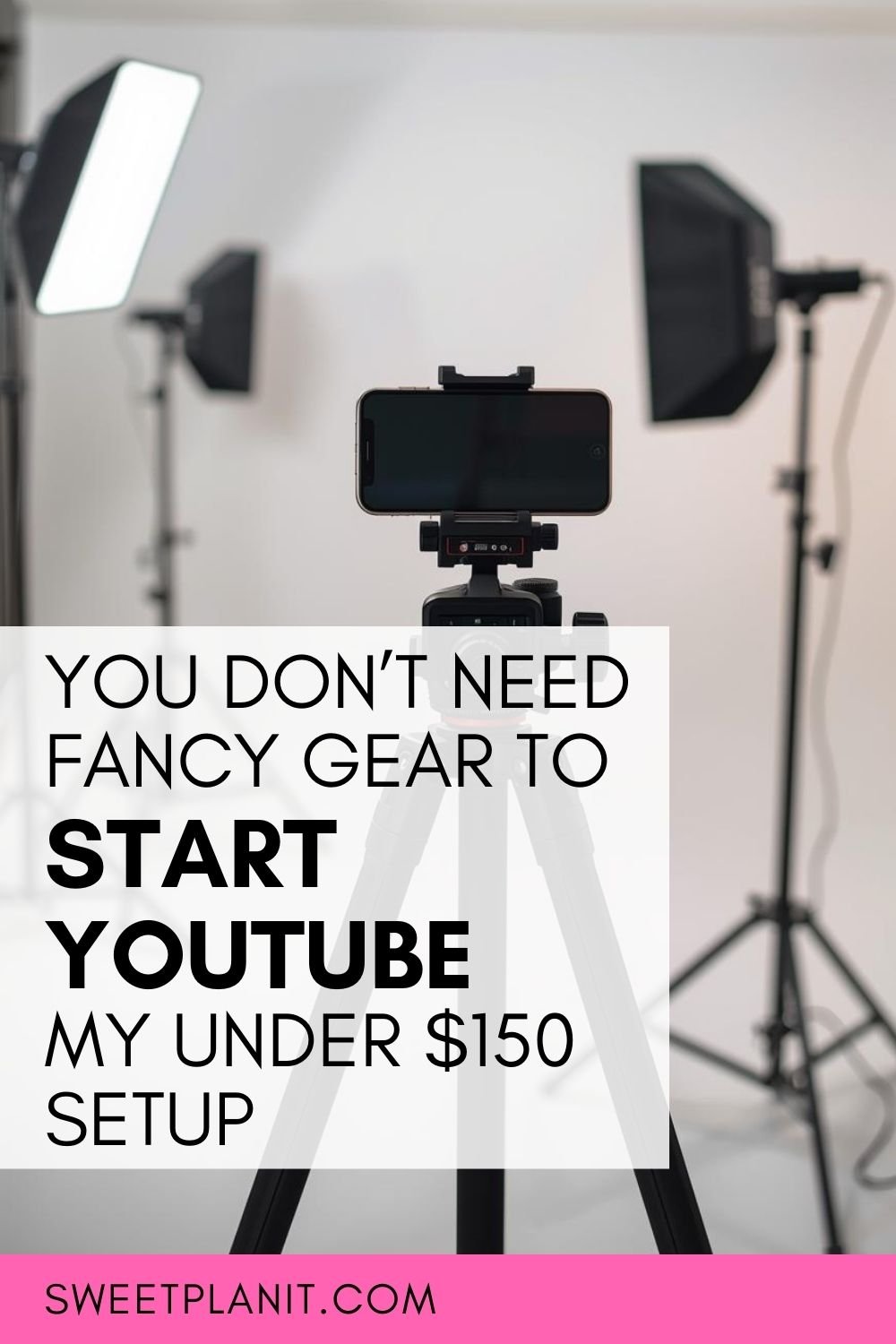
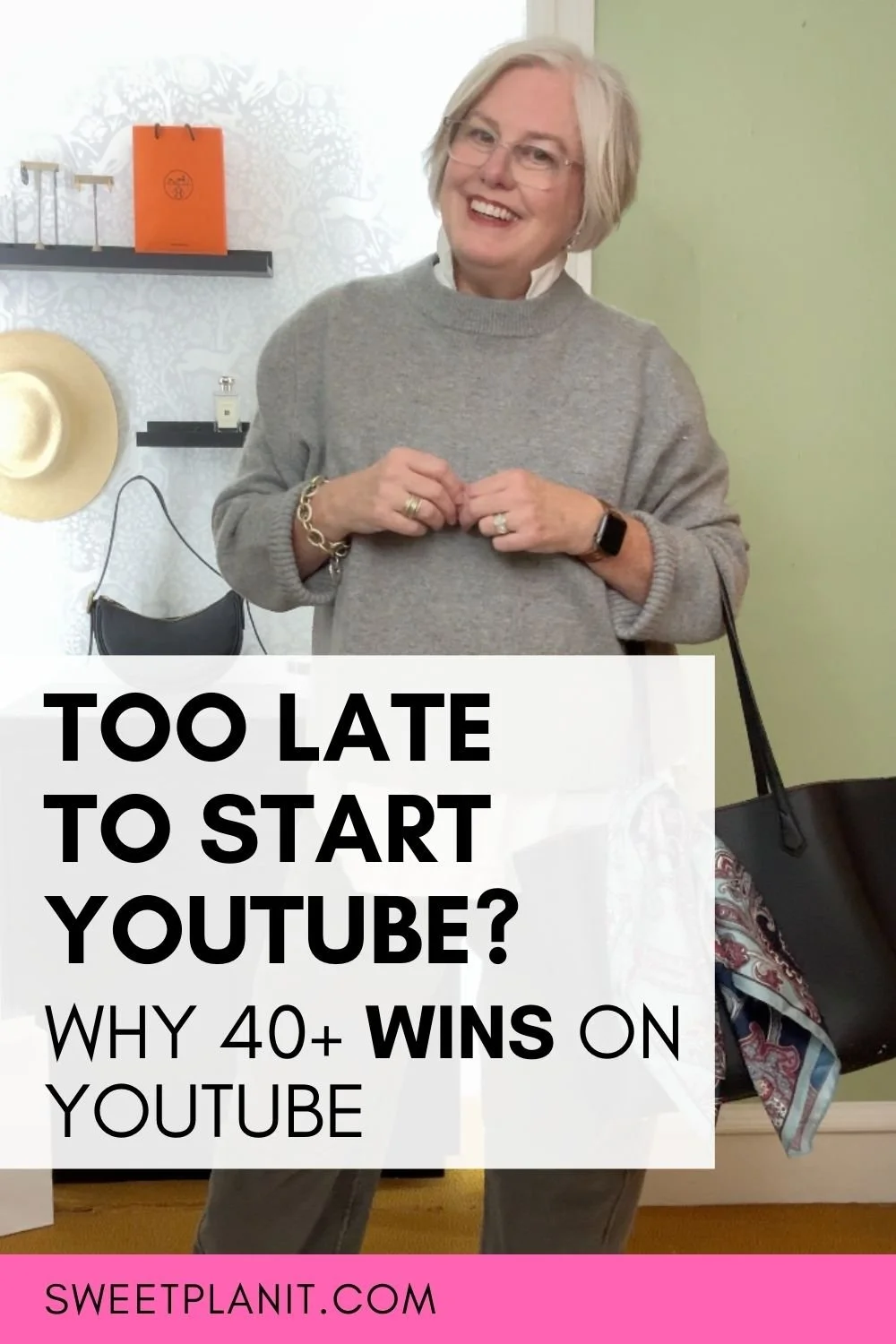
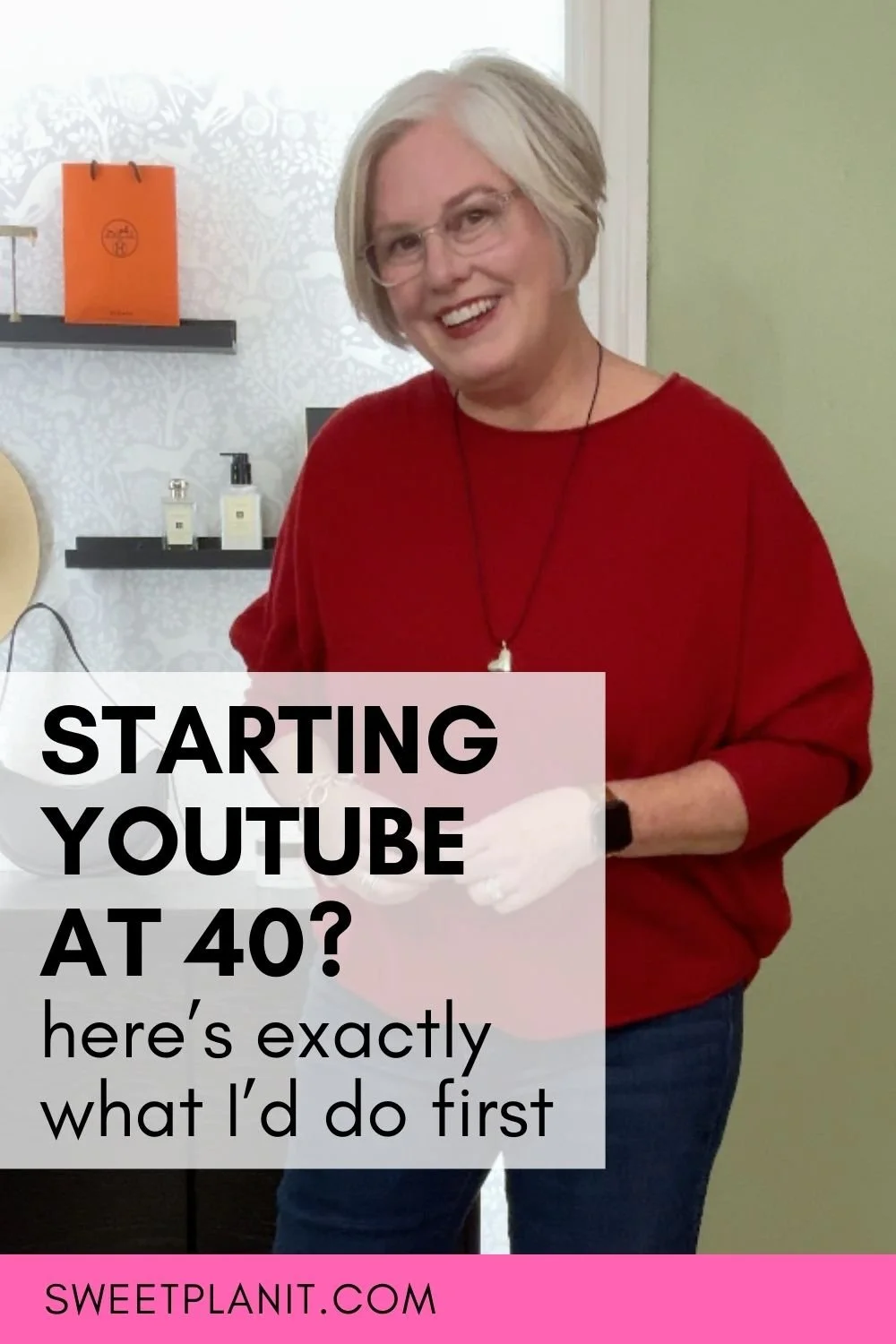


Overwhelmed by YouTube gear? Here’s the simplest YouTube setup that still looks professional, without buying an expensive camera or building a studio. In this post I walk you through what actually matters (especially audio), the beginner-friendly lighting + framing setup, and the exact low-friction gear I use to film fast and consistently. Perfect if you’re starting YouTube over 40, filming at home, and want a simple creator setup that feels polished and approachable.