
If opening your planner makes you feel tense instead of steady, something is off.
Not because you’re bad at planning.
Not because you need more discipline.
And definitely not because you need to buy a thousand new supplies and redecorate every page.
Most of the time, planner stress comes from too much happening in one small space. Too many colors, too many tools, too many expectations, and not enough clarity.

A calm planner isn’t about aesthetics.
It’s about how your brain feels when you open it.
Let’s talk about how to turn your planner into a calm corner you actually want to use, without accidentally turning planning into a craft hobby you have to recover from.
In fact, I have a funny story for you about that.
About ten years ago, I discovered washi tape. I went crazy for it and bought dozens of rolls in various prints, colors, and widths.
Then I decided every page of my planner needed washi tape in the exact same place. I happily taped up the side of every single page of my planner, only to realize that I had a planner so thick in one spot that I was no longer able to write in it!
Now, I use my washi tape sparingly (yes, I still love it), and I tend to use markers to decorate instead of washi tape that will add a lot of bulk to the pages.
So here’s a calmer approach to planning and enjoying your planner.
First: What “Calm” Actually Means (And What It Doesn’t)
When I say calm, I don’t mean boring.
And I don’t mean minimalist in the “no personality allowed” sense.
Calm means:
You can scan the page quickly
You know what matters today
Nothing is screaming for your attention
You don’t feel pressure to make it perfect
Calm does not mean:
Beige-only pages
No fun supplies
Aesthetic over function
Rewriting things just to make them look better
If you’re someone who enjoys nice pens, tabs, or color, you don’t need to give that up. You just need to contain it.
The Biggest Mistake: Making One Page Do Everything
This is where most planner girlies get into trouble.
We try to make one page hold:
appointments
tasks
goals
notes
ideas
reminders
habits
random thoughts
And then we wonder why it feels chaotic.
A calm planner works because each element has a job. When everything lives everywhere, your brain has to work too hard just to decide where to look.
So before we talk supplies, we need to talk structure.
Step 1: Decide What Your Planner Is For
This sounds obvious, but it’s the most skipped step.
Ask yourself:
Is this planner for planning ahead?
Tracking what already happened?
Managing work tasks?
Managing life logistics?
A mix of planning and memory keeping?
There’s no wrong answer. But if you don’t decide this first, you’ll keep adjusting layouts and blaming the planner when it’s really an expectation problem.
For most Sweet Planit readers, the planner’s job is:
seeing the week clearly
making decisions easier
keeping life from feeling scattered
That’s the lens for everything that comes next.
Step 2: Reduce Visual Noise (Not Personality)
Visual noise isn’t about color.
It’s about competition.
When everything is highlighted, nothing is highlighted.
A few practical ways to calm the page:
Use one main pen for writing, like the Pilot G2 Retractable Gel Pens – smooth writing, no skip, no smears — the default for calm planning.
One accent color for emphasis (appointments, deadlines, or priorities). I recommend Stabilo Point 88 Fineliner Pens (Pack of 10) – thin, consistent ink, perfect for occasional emphasis.
Keep decorative elements to the edges, not the center. My favorites are these Post-it Page Flags Assorted Colors – you can mark sections without cluttering your actual spreads.
This is where supplies actually help instead of hurt.
A pen that writes smoothly and doesn’t smudge reduces friction.
Page flags let you mark important spots without cluttering the page.
A simple weekly layout you understand at a glance beats the prettiest spread you avoid using.
This is function supporting calm.
Step 3: Create Physical Boundaries for Planning
Here’s something most people don’t think about:
Your planner doesn’t exist alone.
If it’s floating around with loose pens, sticky notes, receipts, and random papers, it’s going to feel chaotic before you even open it.
This is where a few simple tools make a huge difference:
A planner pouch so everything lives together like this EastHill Zippered Planner Pouch – roomy but not oversized, fits pens, flags, sticky pads, and small trackers.
A small desk tray or catch-all so planning items aren’t scattered. Mindspace Office Desk Organizer Tray – keeps essentials visible and contained, so your planner doesn’t float in chaos.
One bookmark or ruler so you always know where you are. Planner Ruler Bookmark – doubles as a bookmark, stencil, and a straight edge without bulky clips.
Calm isn’t just what’s on the page.
It’s the environment you open the planner in.
Step 4: Contain the “Extras” (Don’t Eliminate Them)
This is especially important for planner girlies who enjoy pretty things.
You don’t need to stop using:
washi tape
stickers
markers
tabs
You just need to stop letting them take over.
A calm approach looks like:
A few rolls of favorite washi tapes to add a bit of style to your pages. PageMore Washi Tape Set – cute washi you can use all year round.
Stickers used for emphasis, not obligation. Planner Sticker Functional Essentials Pack – simple and fun icons for appointments, priorities, and reminders.
Color used intentionally, not automatically. Sharpie Clear View Highlighters (Set of 4) – accent colors option to highlight what’s important.
If you feel pressure to decorate every page, that’s a sign the planner has become a performance instead of a tool.
Your planner should support your life, not demand creative output on a schedule.
Step 5: Build a “Calm Opening Ritual”
This doesn’t need to be deep or time-consuming.
In fact, set a timer for 10 or 15 minutes for planning.
A calm planner habit might be:
Opening to today and writing your Top 3
Checking tomorrow before closing it for the night
Reviewing the week for five minutes on Sunday
The key is repetition, not length.
When you interact with your planner the same way every time, your brain learns that opening it = clarity, not chaos.
That’s what makes it a calm corner.
Step 6: Let Imperfect Pages Stay Imperfect
This is a big one.
If you constantly feel the urge to:
rewrite pages
recopy tasks
start fresh because it “doesn’t look right”
That urge is usually about control, not clarity.
Messy pages mean the planner was used.
Used planners are doing their job.
Calm doesn’t come from perfection.
It comes from trust that the system can hold real life.
What a Calm Planner Actually Gives You
When your planner becomes a calm corner, you’ll notice:
You open it more often
You spend less time fiddling and more time deciding
You stop searching for “the perfect setup”
Planning feels grounding instead of draining
And that’s the whole point.
You don’t need a craft project.
You don’t need a new system.
You don’t need to make planning harder than it already is.
You just need a planner that meets you where you are and gives your brain some breathing room.
That’s calm.
And it’s completely achievable.
Happy planning!
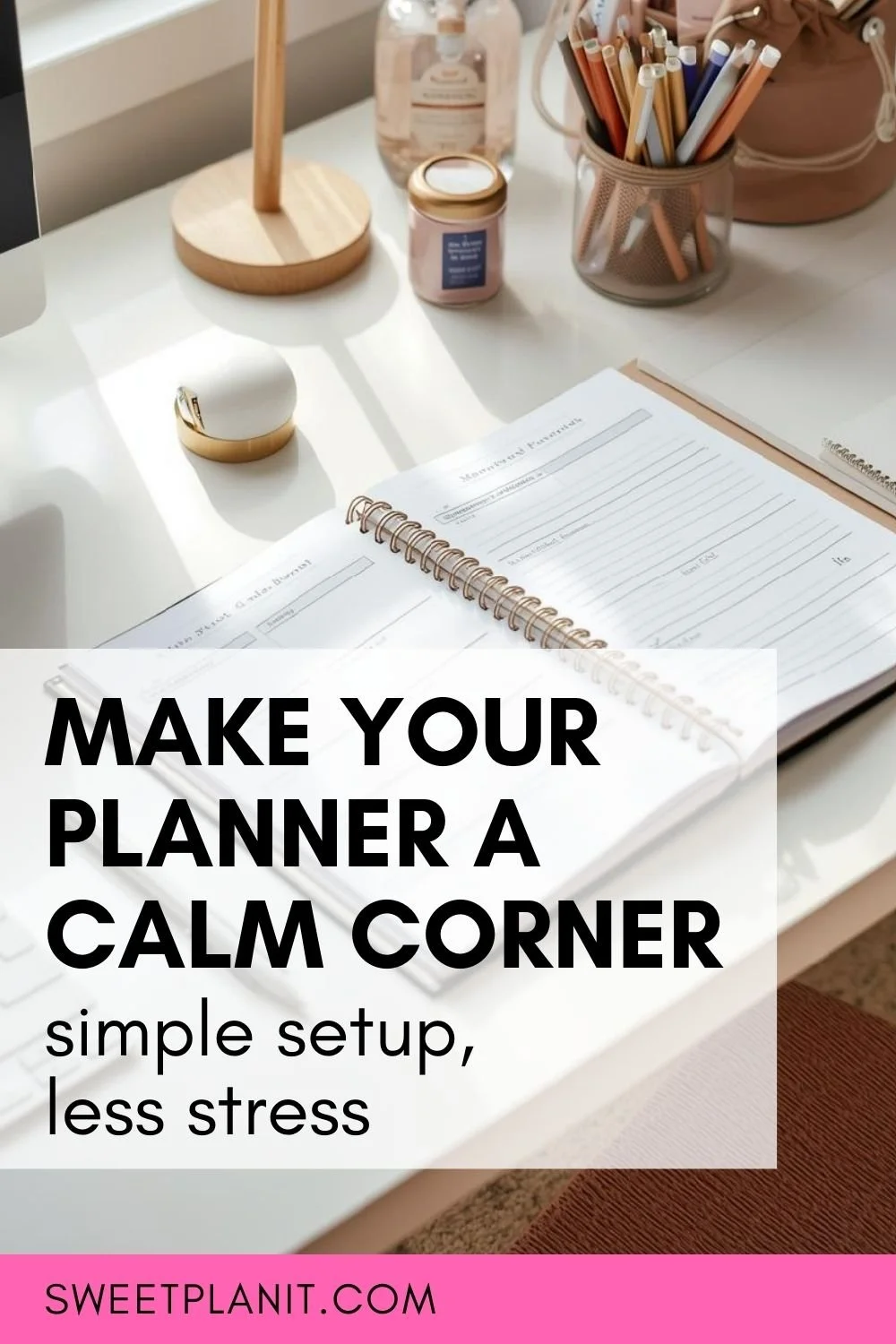

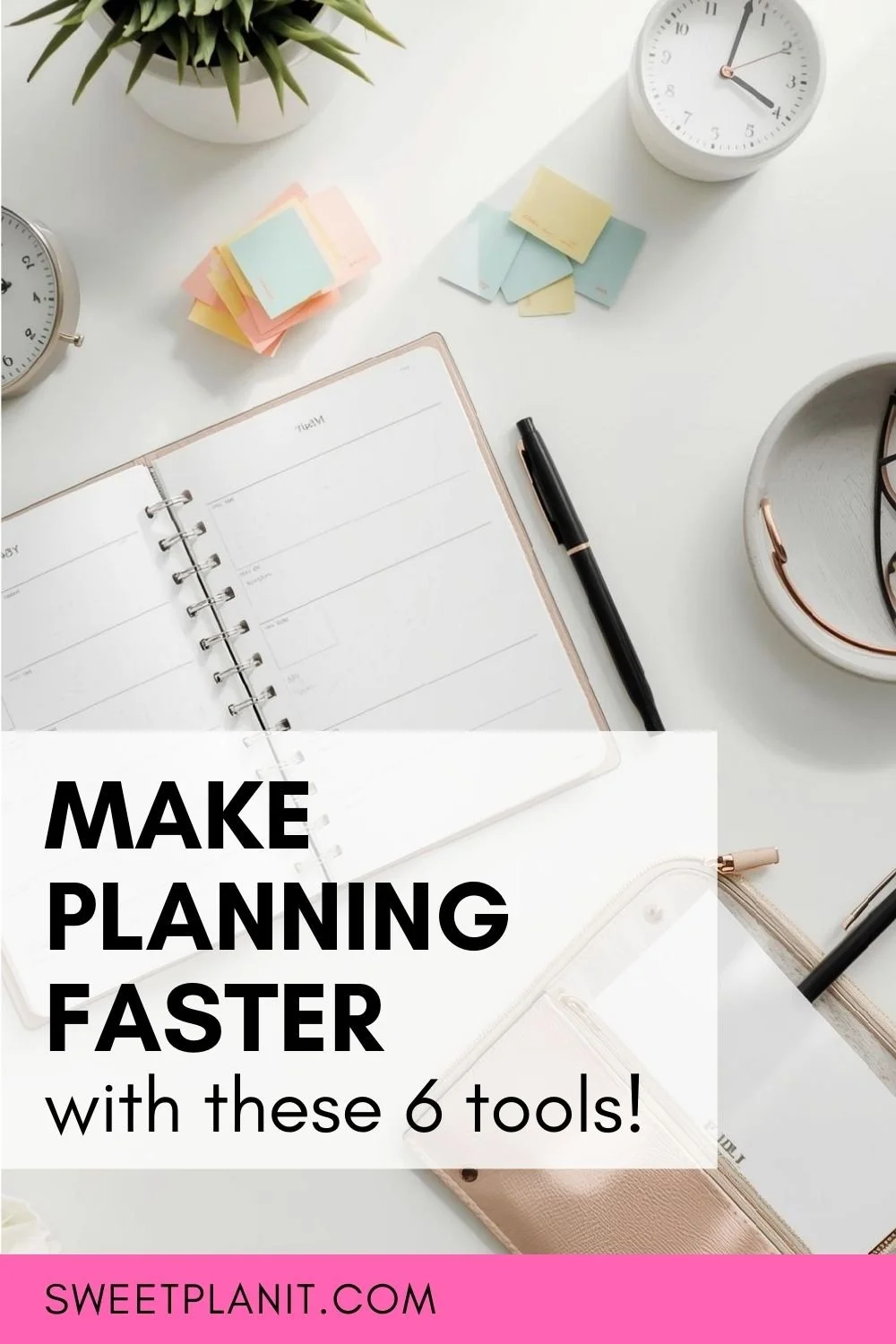


If your planner feels like a chaotic dumping ground instead of a calm place to think, this post will fix that. I’ll show you how to turn your planner into a “calm corner” without turning it into a craft project, no complicated layouts, no perfection pressure. You’ll learn a simple, functional setup using a few small tools (pouch, pens, page flags, tray, timer) so planning feels easier, clearer, and way less overwhelming.