
Here are a few supplies that make planning faster, not prettier
When life gets busy, most planning advice tells you to do more.
More pages. More systems. More color-coding. More effort.
That’s the opposite of what actually helps.
In a busy season, planning needs to be fast, visible, and forgiving. You don’t need a drawer full of supplies. You need a small set of tools that removes friction so you can think clearly and move on with your day.
This is my Busy Season Planning Kit, the handful of supplies I reach for when life is full, and my brain is already working overtime.
No fluff. No decorating pressure. Just tools that make planning easier.
This post may contain affiliate links. Please see my full disclosure for more information.
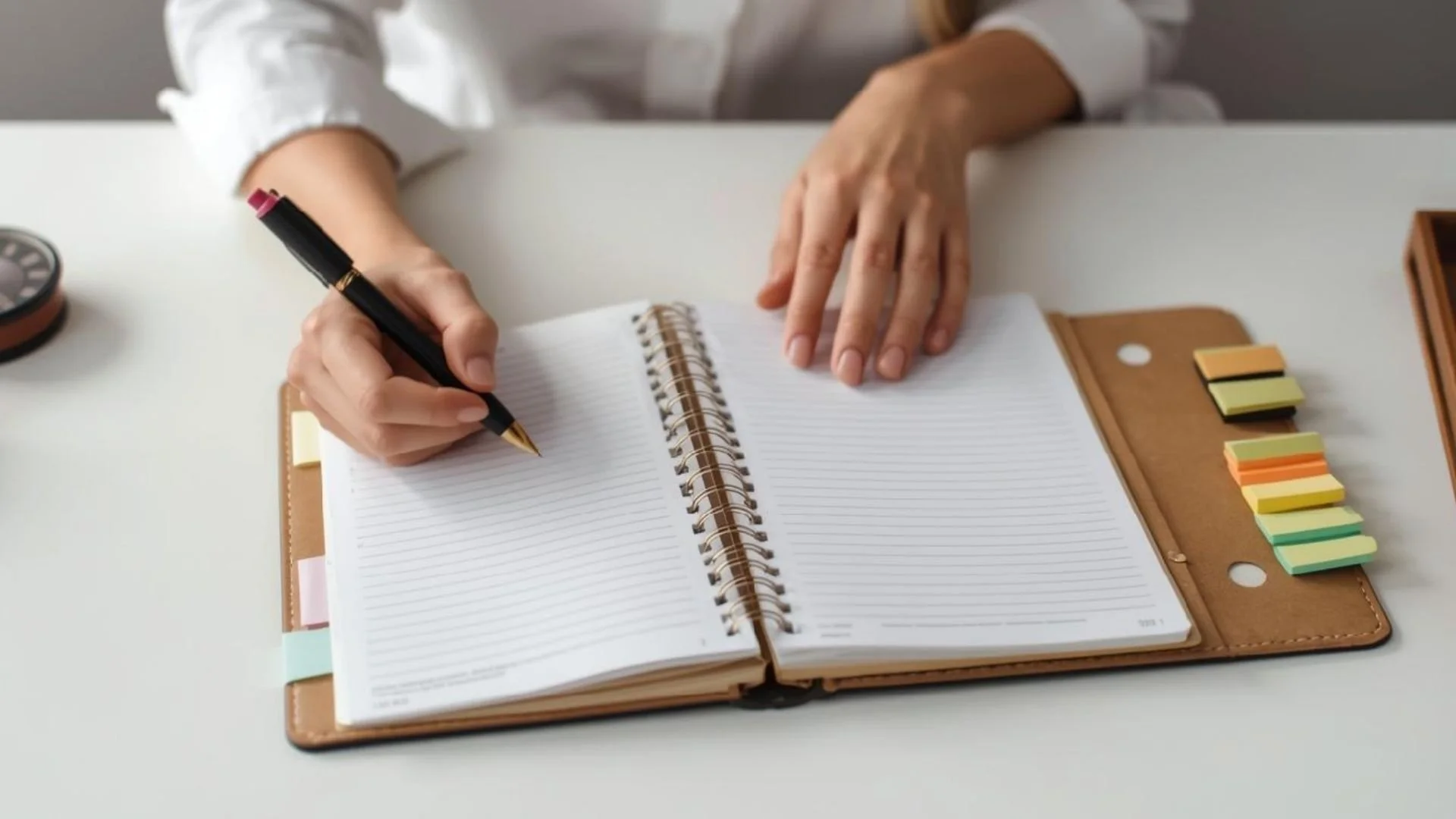
1. Pens that don’t smudge or skip
This sounds basic, but it matters more than people realize.
When a pen smudges, bleeds, or skips, it slows you down. It adds friction. And in a busy season, even small annoyances are enough to make you avoid your planner altogether.
What to look for:
Smooth ink flow
Quick-drying ink
Comfortable grip for fast writing
Here are my favorites:
These are favorites for planner writing because they dry fast, don’t smear, and make everyday planning smoother.
Pilot FriXion Clicker Erasable Gel Pens – quick-dry gel ink that resists smudging and even erases cleanly if you need to adjust plans.
Paper Mate InkJoy Gel Pens (14-Pack) – dries faster than standard gel pens with comfortable grips, a fan favorite for planner notes and color coding.
BIC Round Stic Xtra Life Ballpoint Pens (60-Pack) – classic ballpoint that writes smoothly and resists smears, great for everyday planner tasks.
Uni Power Tank with Grip (5-pack) - if you hate when pens need a scribble before working, you’re going to love these! The ink is pressurized, so it gives you smooth, even writing the second the pen hits the paper. You can also use it to write at an angle or upside down.
You’re not choosing pens for their aesthetic value. You’re choosing them, so writing things down feels easy and satisfying instead of irritating.
This is one of those small upgrades that makes you more likely actually to use your planner every day.
2. Sticky notes for temporary thinking
Busy seasons are full of moving pieces, not permanent plans.
Sticky notes are perfect for:
Temporary priorities
This-week-only reminders
Things you need visible but don’t want to commit to ink
They let you think without overcommitting.
I like using them for:
Weekly Top 3
“Don’t forget” items
Short-term projects
Here are my favorites:
Post-it Super Sticky Notes (Various Sizes) – classic, reliable sticky notes that stay put and are easy to glance at on your planner, desk, or wall.
Assorted Sticky Notes Pack (5+ Pads) – colorful stack that gives you options for weekly reminders you can move around.
(Tip: If you want planner-friendly sticky notes that don’t flop off when you carry your planner, look for Super Sticky or Planner-specific packs.)
When the week changes, the note comes off. No erasing. No rewriting the same task five times. Just adjust and move on.
3. Page flags for quick access (not decoration)
Page flags are not about color-coding your entire life. They’re about speed.
In a busy season, you don’t want to flip around looking for:
This week
Your monthly overview
Your reset page
Page flags mark the pages you need to get to quickly so your planner works like a tool, not a scavenger hunt.
Use them sparingly:
One for the current week
One for the monthly view
One for your reset or planning page
Here are my favorites:
KICNIC Page Markers Sticky Tabs (800 Pieces) – big pack of translucent and neon flags for marking key sections.
Colorful Planner Page Flags Assortment – sets with multiple colors so you can mark whatever matters this week.
Both types are thin enough to flag without bulk but visible enough to find fast.
That’s it. More than that usually creates noise instead of clarity.
4. A small visual timer
Time feels slippery when you’re overwhelmed. Calm things down by using a timer. It is one of my favorite tools to use when I absolutely don’t want to do something. I set it for 5 minutes, thinking, “Okay, I can handle this for 5 minutes.” I’m always shocked at how much I get done in that time.
A small timer helps because it:
Creates a clear start and stop
Makes tasks feel contained
Prevents “I’ll just keep going” burnout
This is especially helpful for:
Five-minute resets
Ten-minute planning sessions
Short focus blocks
You don’t need to plan your whole day around a timer. You just need it to remind you that planning and resetting don’t have to take long to be effective.
Here are my favorites:
Digital Kitchen Timer (Great for 5–15 Minute Blocks) – simple, loud enough to notice, and perfect for short planning sessions.
Pomodoro Timer Cube – desk timer cube with preset times on different sides.
Either one works — pick the look that fits your brand aesthetic.
5. A planner pouch or pencil case
Busy seasons come with clutter. Loose pens, sticky notes, and flags floating around your desk or bag make planning harder than it needs to be.
A small pouch keeps your planning essentials together so you’re not searching every time you sit down.
Think:
One or two pens
Sticky notes
Page flags
Your timer
When everything lives in one place, planning becomes something you can do quickly instead of something you put off.
Here are my favorites:
Planner Accessory Zipper Pouch – fits pens, flags, sticky notes, and other small tools so they don’t get lost in your bag.
Slim Pen & Pencil Bag – with an adjustable elastic band, this will fit around your planner. Also features a zip side pouch for sticky notes, page flags, or more pens.
Look for clear or mesh dividers inside the case so it’s functional and easy to find the tools you need quickly.
6. A simple desk tray (or inbox)
A tray or inbox keeps paper clutter manageable.
A desk tray gives you one designated place for:
Papers you need to deal with later
Notes that haven’t been processed yet
Mail, forms, or reminders
The goal isn’t to eliminate paper completely. It’s to keep it from spreading everywhere.
One tray = one decision point.
You know where things go, and you know where to look when it’s time to deal with them.
Here are my favorites:
Desk Tray Organizer – stacked trays to keep mail, forms, and planning papers in one place.
Desktop Letter Sorter / Paper Holder – vertical option that reduces desktop mess.
Decorative Paper Tray Organizer - lovely water hyacinth paper organizer
Choose one that fits your workspace — the goal is a single home for piles so they don’t spread.
What’s not in this kit (on purpose)
You’ll notice what’s missing:
No fancy markers
No sticker books
No complicated systems
No tools that require maintenance
There’s nothing wrong with creative planning. But when life is busy, your planner needs to support you, not ask for extra energy you don’t have.
This kit is about reducing effort, not adding another project.
How to use this kit in real life
You don’t need to buy everything at once.
Start with the one thing that feels most annoying right now:
If writing feels unpleasant, upgrade your pen.
If pages are hard to find, add page flags.
If time disappears, add a timer.
Each small improvement makes planning feel more doable, which is what actually keeps you consistent.
Planning doesn’t need to be beautiful to work.
It needs to be functional.
And in a busy season, that’s more than enough.
Which is your favorite tool for this type of planning? Let me know in the comments!



If your planner feels like a chaotic dumping ground instead of a calm place to think, this post will fix that. I’ll show you how to turn your planner into a “calm corner” without turning it into a craft project, no complicated layouts, no perfection pressure. You’ll learn a simple, functional setup using a few small tools (pouch, pens, page flags, tray, timer) so planning feels easier, clearer, and way less overwhelming.