
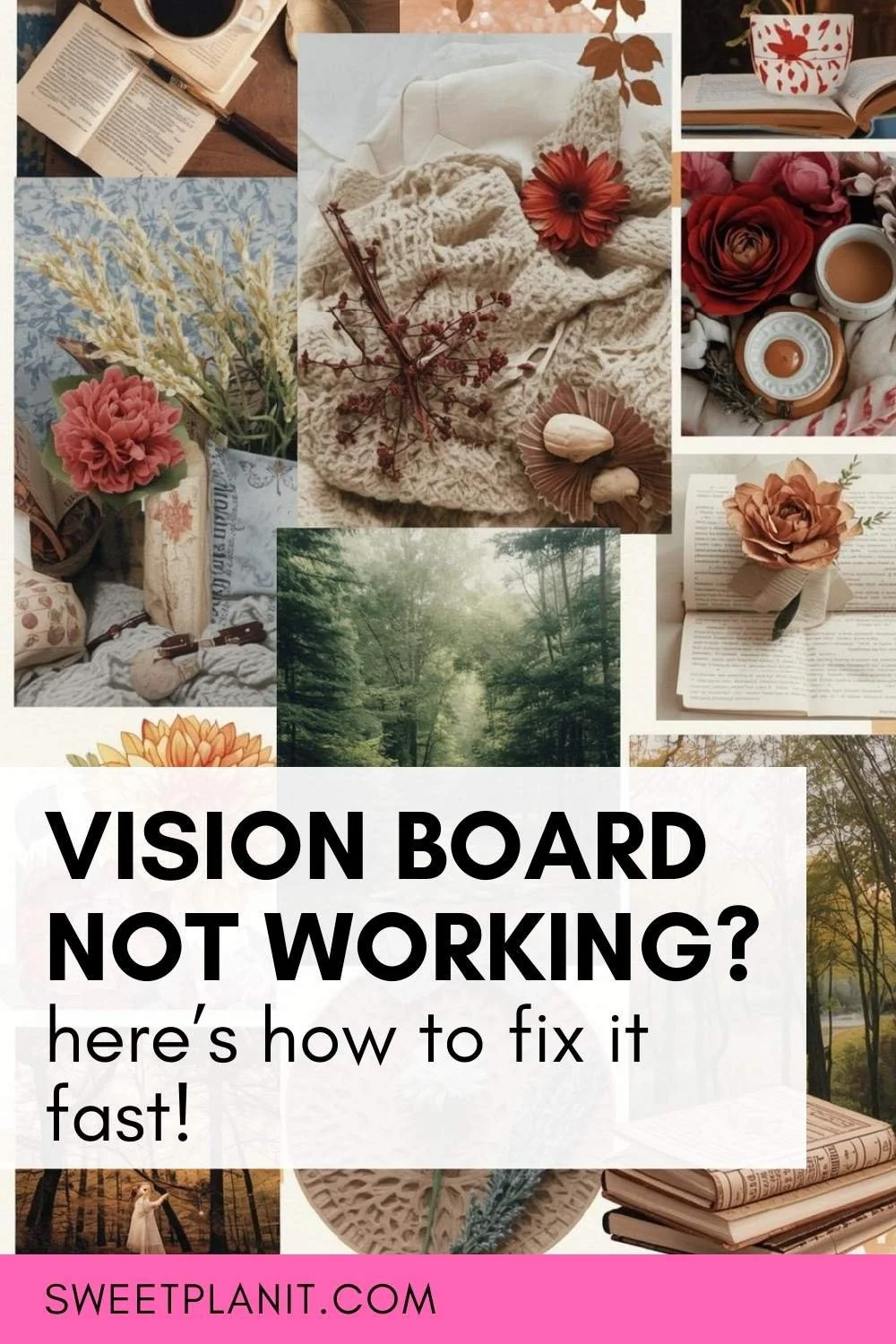
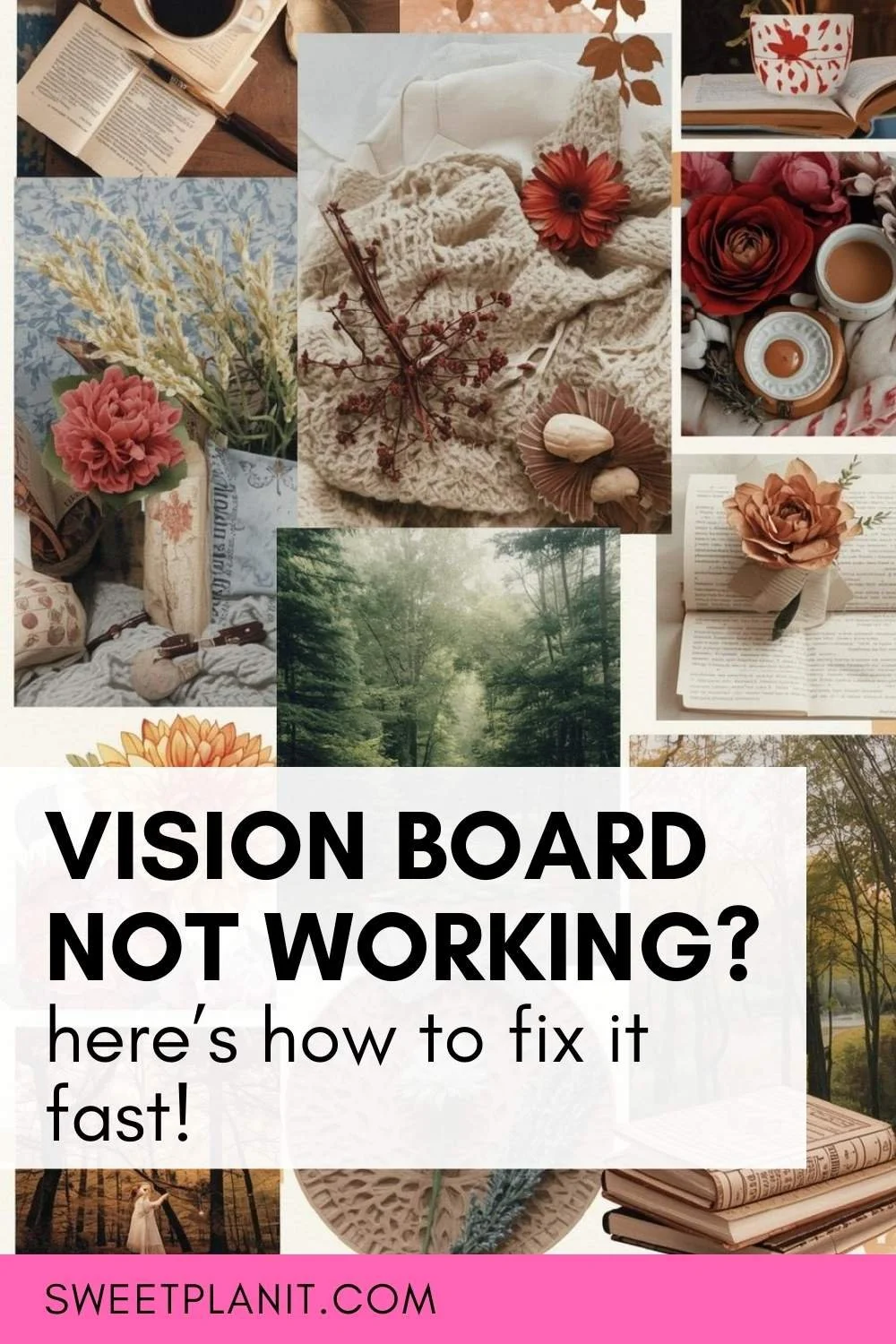
Why Your Vision Board Isn’t Working (And How to Fix It)
If you’ve ever made a vision board that looked great…
And then quietly collected dust by February, you’re not alone.
Most vision boards fail for one simple reason:
They’re built for aesthetics, not action.
Pretty boards are easy. Useful boards require a little intention.
This post will show you how to create a vision board that actually works, meaning it guides your decisions, supports your goals, and helps you stay focused long after the initial motivation fades.
No glitter glue required.

Why Most Vision Boards Stop Working
Traditional vision boards tend to fall into one of these traps:
They’re too vague.
They’re too full.
They’re based on fantasy instead of real life.
They’re made once and never looked at again.
A board filled with “dream life” images can feel inspiring for a moment, but inspiration fades quickly when there’s no clear connection to your actual days.
A working vision board does something different.
It gives you direction, not pressure.
Step 1: Start With Direction, Not Pictures
Before you collect a single image, answer this question:
What do I want more of this year?
Not goals yet. Just direction.
Examples:
More calm
More consistency
More energy
More confidence
More margin
More focus
This step matters because your vision board should support how you want life to feel, not just what you want to achieve.
If you skip this part, you’ll end up with a board that looks nice but doesn’t guide anything.
Step 2: Choose 3 Focus Areas (Not Your Whole Life)
This is where most people overdo it.
Your vision board does not need to represent every role, responsibility, and dream you have.
That’s overwhelming.
Instead, choose three focus areas for the season or year.
Examples:
Health
Home
Work
Creativity
Finances
Relationships
Personal growth
Three is enough to create clarity without creating pressure.
If everything is important, nothing is.
Step 3: Translate Each Focus Area Into One Clear Intention
Now we bridge the gap between vision and real life.
For each focus area, write one simple intention.
Examples:
Health → “I move my body in ways that feel supportive, not punishing.”
Work → “I focus on fewer priorities and finish what matters.”
Home → “My space feels calm and functional, not perfect.”
These intentions become the filter for what belongs on your board.
If an image doesn’t support one of these intentions, it doesn’t go on the board.
Step 4: Choose Images That Reflect Real Life Progress
This is where vision boards often drift into fantasy.
Instead of choosing images that represent the end result, choose images that reflect the process.
Examples:
A peaceful morning routine instead of a luxury vacation
A clean, lived-in workspace instead of a perfect office
Comfortable, realistic outfits instead of runway looks
You want images that feel achievable, not intimidating.
If an image makes you feel behind, it doesn’t belong.
Step 5: Add Words That You’ll Actually Remember
Words anchor your board to action.
Choose:
One guiding word
One short phrase per focus area
One reminder you need to hear on hard days
Examples:
“Progress over perfection.”
“Do the next right thing.”
“Consistency beats intensity.”
Keep the wording simple enough that it sticks.
This is not a manifesto. It’s a reminder.
Step 6: Decide Where Your Vision Board Lives
A working vision board needs visibility.
Choose one place:
Inside your planner
On your desk
As your phone or tablet background
On a wall, you see daily
If you have to go looking for it, it won’t work.
The goal isn’t constant staring.
It’s a gentle, regular reinforcement.
Step 7: Revisit It Regularly (Without Rebuilding It)
You don’t need to remake your vision board every month.
Instead:
Glance at it weekly
Check in monthly
Adjust seasonally if needed
Ask:
Does this still reflect what I’m working toward?
Is anything here no longer helpful?
Do I need to simplify or refocus?
A vision board is allowed to evolve.
That’s not quitting. That’s awareness.
What a Vision Board Is (and Isn’t)
A vision board is:
A direction tool
A focus reminder
A decision filter
It is not:
A magic spell
A productivity contest
A test of discipline
If your board helps you make clearer choices, it’s working.
If You Want Help Getting Started
If staring at a blank board feels overwhelming, start smaller.
Use:
Vision board prompts
Focus area exercises
Weekly or monthly resets to reinforce the vision
Vision boards work best when they’re part of a larger planning rhythm, not a one-time project.
Final Thought
The best vision board is not the prettiest one.
It’s the one that quietly supports your choices, helps you reset when you drift, and reminds you what matters when life gets loud.
Simple. Realistic. Actionable.
Happy planning!


Working from home sounds like freedom, until you can’t focus and your to-do list just stares at you. This simple Sweet Planit routine helps you reset your brain, choose a clear Top 3, time block your day, and actually get work done without overplanning. Practical, doable, and made for busy seasons.