
The Simple Habit Tracker You’ll Actually Use (No Bujo Required)
Habit trackers have a reputation.
They start out adorable and inspiring… and end up abandoned by week two like a sourdough starter you swore you’d maintain.
And if you’ve ever looked at a bullet journal tracker and thought, “That’s beautiful, but I do not have the emotional energy to color-code my way to consistency,” welcome. You’re my kind of gal.
You don’t need a fancy tracker. You need a simple one you’ll actually use when life is busy, your brain is tired, and you’re not trying to earn a gold star for aesthetics.
So let’s build that.
This is a no-bujo, realistic habit tracker for women who want steady progress without turning planning into a second job.

Why most habit trackers fail
Let’s be honest. They fail because they’re trying to do too much.
Common problems:
Too many habits on one tracker.
Too much daily effort to fill it in.
Too much “perfect or nothing” energy.
Too much pressure to track everything, forever.
A tracker should support your habits, not guilt you into quitting them.
So we’re stripping it down to what works.
What makes a habit tracker “actually usable”
A habit tracker works when it is:
Small. You track a few habits, not your entire life.
Visible. You see it often without hunting for it.
Fast. It takes 10 seconds to update.
Flexible. It survives messy weeks.
That’s the whole recipe.
Step 1. Pick only 2–4 habits
This matters more than the tracker design.
Choose two to four habits max for the month.
If you track 10 habits, you’ll track zero habits. Ask me how I know.
Pick habits that are:
Small enough to repeat.
Clear enough to measure.
Connected to your goals or baseline.
Examples:
Walk
Protein breakfast
Weekly reset
10 minutes on a creative project
Early bedtime
Water before coffee
Evening kitchen reset
Make your list short enough that you feel a tiny sigh of relief when you read it.
Step 2. Use the “dots, not drama” method
Here’s the tracker you’ll actually use.
The layout
You only need:
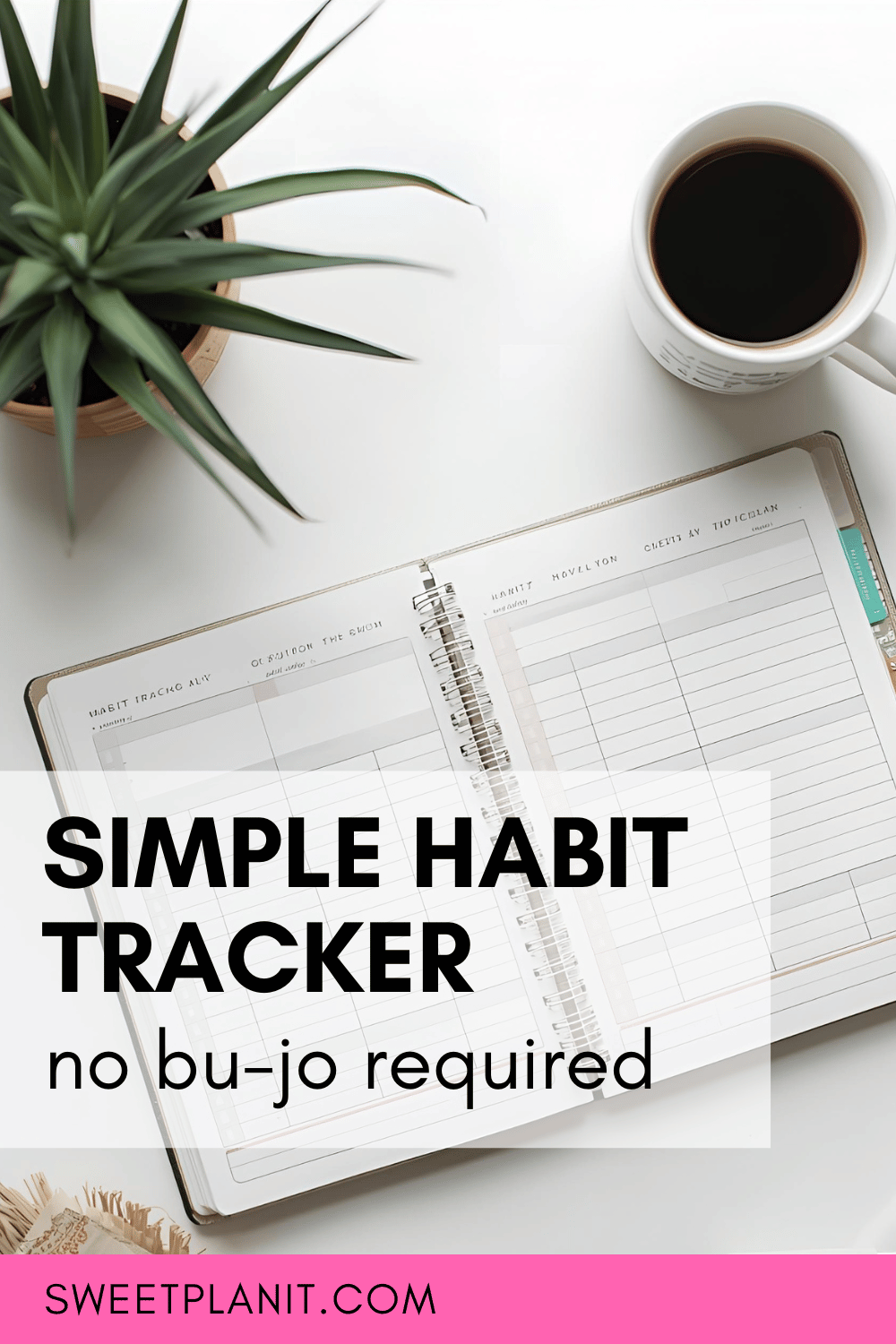
A grid with days 1–31 down the side (or across the top).
Your habits listed across the top (or down the side).
A tiny mark for each day you did the habit.
That’s it.
No colors required. No stickers required. No calligraphy required. If you love those things, great, but they’re not the point.
How to mark it
Use one simple mark:
A dot
A check
An X
A filled square
Pick one and stick with it.
You’re tracking consistency, not creating art.
Step 3. Build in a “minimum version”
This is what keeps your tracker from becoming a guilt trap.
For each habit, decide what the minimum counts as on a hard day.
Examples:
Walk habit.
Minimum counts as 10 minutes.
Stretch habit.
Minimum counts as 2 minutes.
Creative work habit.
Minimum counts as opening the project and doing something tiny.
Weekly reset habit.
Minimum counts as a 5-minute mini reset.
When you include a minimum version, you stop falling off.
You “stay in the habit” even when the week is messy.
That’s how real progress works.
Step 4. Track weekly habits differently
Some habits don’t happen every day.
So don’t force them into a daily grid.
Examples:
Weekly reset
Meal prep
Strength workouts
Cleaning routines
Content batching
For those, use a weekly row tracker:
Week 1: ___
Week 2: ___
Week 3: ___
Week 4: ___
You just check the week when it’s done.
Simple. Clean. Actually doable.
Step 5. Put the tracker where you’ll see it
Your tracker should be visible enough to remind you naturally.
Good spots:
Inside the front cover of your planner.
The first page of your weekly section.
A single “Habits” page you flip to every Sunday.
Notes app widget on your phone if you’re digital.
If you have to hunt for it, you won’t use it.
Visibility is half the magic.
Step 6. Review once a week, not every day
Daily tracking is fine.
Daily judging yourself is not.
Once a week (during your Weekly Reset), glance at your tracker and ask:
What’s working?
What keeps slipping?
Do I need to adjust the habit size or timing?
Example:
“My walks are slipping on Fridays. I’m moving them to Thursday.”
“Protein breakfast is easy, keeping it.”
“Creative habit is too big, shrinking to 5 minutes.”
This keeps your tracker realistic instead of guilt-fueled.
What this tracker looks like in real life
Let’s say your habits for January are:
Walk
Protein breakfast
Weekly reset
10 minutes creative time
Your tracker grid is a page with:
Days 1–31
Four habit columns
Tiny dots or checks
Some days you’ll hit all four.
Some days you’ll hit one.
Some days you’ll hit none.
And instead of thinking, “I blew it,” you think,
“Okay, what made this week hard, and how do I keep it doable?”
That’s the difference between tracking and self-punishment.
If you hate tracking, try this even simpler version
The “Two-Row Tracker.”
Row 1: Habit anchors for the week
Row 2: Checkmarks across the week
That’s it.
If your nervous system says, “I cannot handle a grid right now,” use the tiny version. It still works.
A realistic reminder before you go
You do not need a tracker to prove you’re disciplined.
You need a tracker to make your habits easier to repeat.
A good habit tracker feels like support.
Not pressure. Not performance.
Support.
So keep it small. Keep it visible. Keep it fast.
And let progress be boring and steady.
That’s how it sticks.




Working from home sounds like freedom, until you can’t focus and your to-do list just stares at you. This simple Sweet Planit routine helps you reset your brain, choose a clear Top 3, time block your day, and actually get work done without overplanning. Practical, doable, and made for busy seasons.